A Field Guide To Ghost Hunting Outdoors

Quick warning up front (Read this first)

Outdoor ghost hunting is harder than investigating a building. Period.
There are more variables outside. Wind. Animals. Water. Bugs. Distant traffic. People talking a quarter-mile away. Even your own footsteps can sound like something following you. That’s why outdoor investigations have a lower “clean evidence” rate than indoor ones.
But here’s the thing. A lot of history happened outdoors. Trails, bridges, cliffs, rivers, battlefields, old roads. If a location has deep emotions baked into it, the activity is often there too. You just need to be more disciplined. Methodical. You need tighter standards. And you need to take safety seriously.
This guide will help you do outdoor investigations and get credible evidence.
If you only read one thing:
Outdoors is about location choice + short sessions + clean audio + safety. Nail those four and you’ll stop wasting investigation time.
The Outdoor Ghost Hunting Mindset

If you want to ghost hunt outdoors, you have to make peace with one truth.
Most weird things you experience outside are just … outside.
That doesn’t mean “nothing paranormal happens outdoors.” It means you apply stricter rigor to evidence collectoin. You need to work like a field investigator.
Here’s the mindset I use:
- Assume nature first.
- Log everything.
- Treat “maybe” as “maybe.”
- Look for patterns, not one-off moments.
A single snap in the woods is not evidence. A single voice on audio is not proof. But if you capture the same voice twice, from two recorders, with two people hearing it in real time, and it lines up with the history of the location, now we’re talking.
Outdoor ghost hunting is less about “a big moment” and more about building a case.
Outdoor evidence rule:
If you can’t repeat it, confirm it, or explain it, treat it as a clue. Not proof.
Pick a location that can actually produce activity
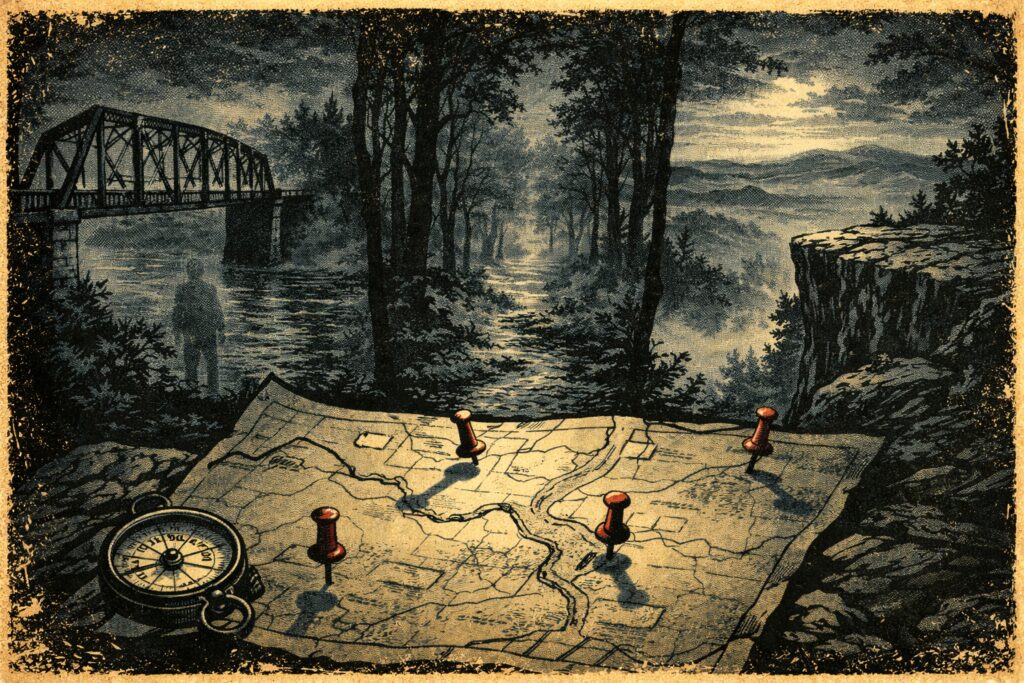
Outdoor investigations live and die on location choice.
If you choose a random patch of woods with no history, you’re mostly going to record wind and raccoons. If you choose a location with a tragic story, repeated reports, and specific hotspots inside the larger area, your odds go way up.
The “tragic history” filter
This is blunt, but it matters. Places tied to tragedy tend to produce stronger reports. That can include:
- deaths and accidents
- violence and conflict
- disasters
- old burial grounds
- locations where people suffered for a long time
I’m not saying you need to chase pain for content. You do need to understand that intense emotion leaves a mark in the stories people tell. And sometimes it leaves a mark in the environment too.
Outdoor hotspots (and what to look for at each)
Outdoor “haunted places” are usually not haunted evenly. There’s almost always a specific zone. A bend in the trail. A bridge span. A cliff edge. A riverbank. An old foundation line.
Below are common outdoor hotspots and how to work them.
Battlefields
Battlefields have layered history. You can have residual activity, intelligent responses, and plain old human imagination all mixing together.
Where to focus:
Look for choke points, old roads, ridge lines, tree lines, and areas where fighting was concentrated.
Common false positives:
Wind-driven movement, distant voices, wildlife, and the emotional weight of the place.
Best approach:
Audio-first. Short sessions. Lots of silence windows.
Cliffs and overlooks
Cliffs and overlooks often tie to accidents, suicides, or “last seen” stories. They also create weird acoustics.
Where to focus:
Safe distances only. Don’t investigate right on the edge. Pick a stable viewing area with a clear line of sight.
Common false positives:
Echoes, falling rocks, wind gusts, and distant traffic bouncing off terrain.
Best approach:
Stationary audio with wind protection. Keep your lights controlled.
Caves and mine openings
I’m going to be direct. These can be dangerous. Collapses happen. Bad air happens. People get stuck.
Where to focus:
Outside the entrance only unless you have legal access, training, and a real safety plan.
Common false positives:
Airflow changes, echo effects, animal movement, and your own voice bouncing back.
Best approach:
Treat it like a boundary. Investigate the threshold, not the interior.
Water: ponds, lakes, rivers
Water is loud. It never stops moving. It can trick you.
But water locations are also where a lot of tragedies happen. Drownings. Boats. falls. crossings.
Where to focus:
Old docks, bridge approaches, boat launches, bend points in rivers, and known accident sites.
Common false positives:
Water noise that sounds like whispers, frogs, birds, and wind across the surface.
Best approach:
Use audio, but accept that EVPs will be harder here. Use tight questioning and longer silence windows.
Abandoned towns and village sites
These spots can be incredible because you’re often standing where daily life used to happen.
Where to focus:
Old roadbeds, foundation lines, cemetery edges (if present and allowed), and any remaining structures.
Common false positives:
Old metal moving in wind, loose boards, wildlife inside debris piles.
Best approach:
Daylight recon first. Then return at night with a plan.
Worn roadways and old routes
Old roads carry stories. Stagecoach routes. logging roads. historic trails. places where people traveled tired, injured, desperate, or afraid.
Where to focus:
Intersections, tight curves, old crossings, and spots where accidents happened.
Common false positives:
Distant cars, wind through corridor-like tree lines, shifting shadows.
Best approach:
Quiet listening sessions. Keep the team spread out but connected.
Bridges
Bridges are classic for a reason. They’re crossings. They’re boundaries. They’re also sites of accidents and tragedies.
Where to focus:
Approaches and midspan areas. Listen near supports if it’s safe and legal.
Common false positives:
Water noise, vibration, wind tunnel effects, and cars.
Best approach:
Short sessions, clear comms, and strict safety.
Woods and forests with a history
Most forests are just forests. The key phrase is “with a history.”
Where to focus:
Old homesteads, grave sites, known incident locations, and trails with repeated reports.
Common false positives:
Everything. Seriously. This is the noisiest environment for false positives.
Best approach:
Tight method, good logs, and a team that stays quiet.
Hotspot stacking
The best locations stack layers. A bridge over a river near an old roadway. A cliff near a trail with a tragic story. When the history overlaps, the reports often overlap too.
Research Before You Go

Most people skip this part. Then they wander around in the dark hoping something happens.
Don’t do that.
Outdoor investigations work best when you show up with targets. Not one big area. A short list of specific zones.
What to research (the short list)
- local history sites and museum pages
- archived news articles
- old maps and place name histories
- documented accidents and disasters (when available)
- repeated witness stories from locals
You’re not trying to write a thesis. You’re trying to answer one question.
Where do people consistently report activity, and why?
Talk to locals
Locals can save you hours of wandering.
They’ll tell you, “Don’t go there at night,” or “That’s where people hear footsteps,” or “That bridge has a story.” Even if they don’t believe in ghosts, they usually know the history.
Here’s a simple script:
- “Have you heard stories about this place at night?”
- “Is there a spot people avoid?”
- “Any weird sounds, lights, or voices?”
- “Did anything bad happen here that people still talk about?”
Be respectful. Don’t push. And don’t treat anyone like a caricature in your reports.
Safety and legality
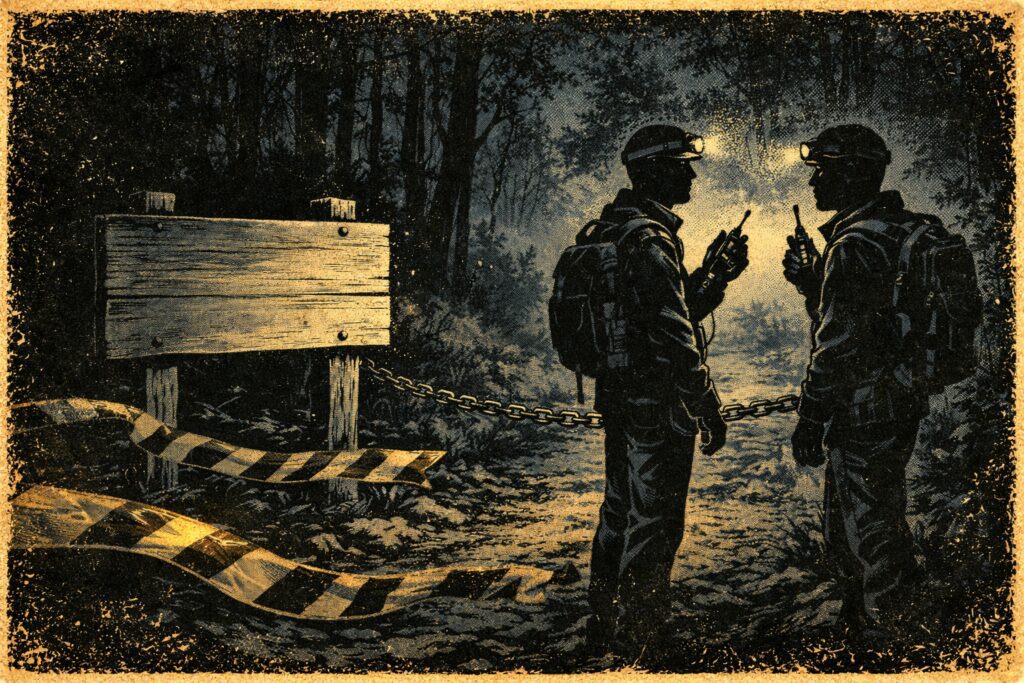
If you only investigate indoors, outdoor safety can surprise you.
Outside, the threats are not hypothetical. Weather turns. Batteries die. People get lost. Someone steps wrong and breaks an ankle. Wildlife gets spooked. And sometimes the biggest problem is other humans.
Permission and access
Start here. Know where you are.
- Public land still has rules. Many parks close at dusk.
- Private land is private land. Don’t trespass.
- Cemeteries can have strict hours and rules. Respect them.
If you don’t have permission, don’t go. Getting arrested is not a “cool story.”
Weather reality check
Wind kills audio. Rain creates false visuals. Cold drains batteries. Heat makes people sloppy.
If conditions are unsafe, call it. You can always come back.
Wildlife and “the human problem”
Wildlife is real. So are people.
- Know what animals live in the area.
- Carry light and a backup light.
- Have a plan if you run into someone aggressive.
- Investigate in a group. Always.
Never hunt alone
Outdoor investigating is not the place to be a lone wolf. If something goes wrong, you want another human there.
Gear that actually matters outdoors

Outdoor ghost hunting can turn into a gear circus. Don’t do that either.
You want a setup that keeps you safe and captures clean audio.
The safety kit (non-negotiable)
- headlamp + backup light
- extra batteries or power bank
- layers and rain protection
- water and snacks
- basic first aid
- offline map or GPS app
- a simple check-in plan
Audio gear (the real star outdoors)
If you’re serious about outdoors, audio is king.
Video is useful, but outdoors it’s often a bug-fest of false positives. Audio gives you better odds, especially if you learn how to protect it from wind.
Basic tips:
- use a windscreen
- keep the mic off your body if possible
- don’t point the mic into open wind corridors
- record a baseline sample when you arrive
My rule: if it’s important, run two recorders.
Cameras and night vision
Cameras are great, but outdoors they get messy fast.
Bugs love IR light. Moisture creates haze. Headlamps create flares. Tree branches create “shadow people” every five minutes.
Use cameras, but don’t let cameras run the investigation.
Communication tools (structure saves you)
A larger group can actually help outdoors, because it lowers the chance of someone getting isolated.
But only if you communicate.
Walkie talkies are underrated. They keep you coordinated and safe. They also help you log who said what and where.
Gear To Avoid When Ghost Hunting Outdoors
Anything that generates a EM field, detects movement or temperature changes will generate so many false positives, it’ll drive your crazy. So, avoid these gadgets:
- REM pods
- MEL meter with REM
- EDI+
- Flux2
- Onvoy Ghost Box
- Any data logger
- Shadow detectors
You get the gist. Now, gadgets that measure EMF will work. I usually stick to a camcorder and audio when investigating outdoors.
A repeatable outdoor investigation method (step-by-step)

This is the part that makes outdoor investigating worth your time.
Step 1: Arrive and do a baseline
When you first arrive, don’t start talking. Don’t start provoking. Don’t start running gear like a maniac.
Just listen.
Give yourself 5–10 minutes of quiet to capture:
- wind level
- water noise
- distant traffic
- animal calls
- any human voices nearby
Record a baseline audio sample. This gives you a “control” to compare later.
Step 2: Work in short sessions
Outdoor hotspots don’t always reward long vigils.
I like 20–30 minutes per zone. Then I move.
Why? Because outdoors is dynamic. Conditions shift constantly. If you stay in one spot for three hours, you’ll confuse normal changes for “activity.”
Short sessions keep your data cleaner.
Step 3: Use a simple team layout
Outdoor hunts get chaotic when everyone does everything.
Try this:
- Two-person pods or small teams
- One person runs prompts
- One person logs time and events
- Everyone else stays quiet unless it’s safety-related
Step 4: Ask better questions outdoors
Keep prompts short. Outdoors eats sound.
Examples:
- “Can you make a noise near us right now?”
- “Can you walk toward this light?”
- “What happened here?”
- “Who is here with us?”
Then shut up.
Silence is where you catch things.
Outdoor session recipe:
2 minutes baseline. 6 minutes prompts. 2 minutes silence. Repeat 2–3 times.
The big outdoor false positives (and how to debunk them)
This is why outdoor ghost hunting frustrates people.
They capture something weird. They get excited. Then later it falls apart.
That’s normal. Here’s how to stay ahead of it.
Orbs and mist
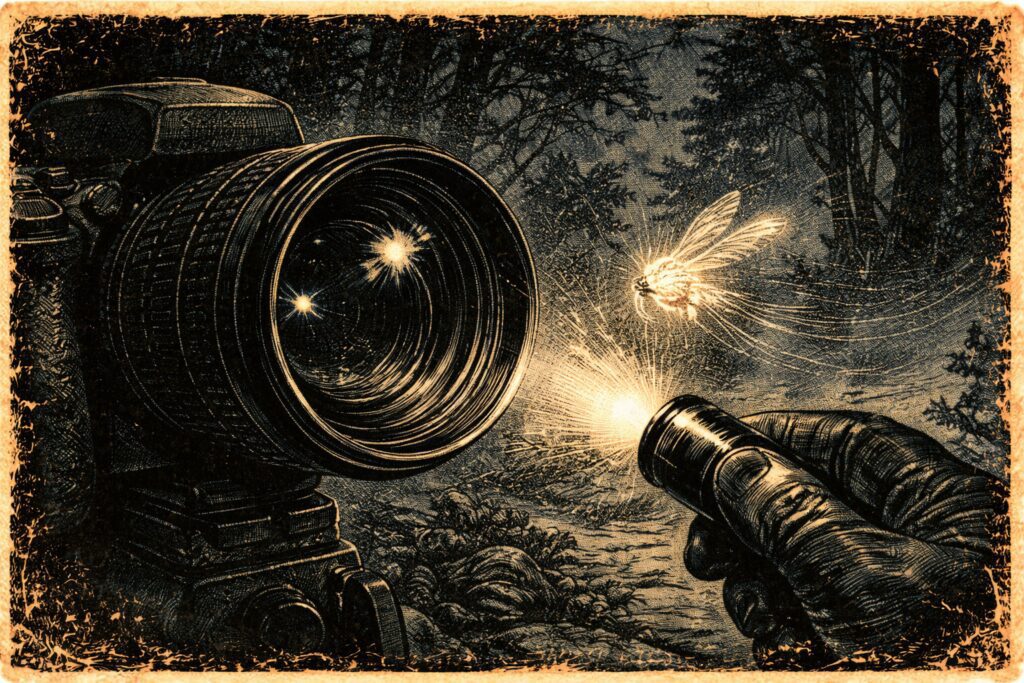
Outdoors, “orbs” are usually:
- bugs near the lens
- moisture, drizzle, fog
- breath in cold air
- dust or pollen
- lens flare from a headlamp
If you record an orb, try to reproduce it. Move your light. Change angles. Check for insects. If it’s repeatable with normal causes, treat it as solved.
Shadow figures
Outdoors creates endless shadow tricks:
- moving branches
- uneven ground
- shifting light sources
- distant headlights
- your own team walking behind you
This is why logs matter. If someone moved, you want that noted.
EVP contamination
Outdoor EVPs are tough because you have:
- wind gusts through leaves that sound like whispers
- owls and coyotes that sound human
- frogs and water that create “voices”
- distant people talking that carry farther than you think
If you catch something, ask:
- Were there other people nearby?
- Did anyone on the team talk?
- Is there a road? A trail? A campsite?
Temperature changes
Outdoors changes constantly. A “cold spot” outside is rarely impressive on its own.
If a temperature change lines up with a sound, a visual, and a specific location tied to the history, then it becomes more interesting. But temperature alone is weak evidence outside.
How to review evidence from an outdoor ghost hunt

The review process is where outdoor investigations are won or lost.
If you’re casual about it, everything becomes a ghost. If you’re careful, you’ll find the real odd moments that hold up.
A simple credibility ladder
- Interesting: something odd happened
- Consistent: it happens more than once
- Corroborated: multiple devices or witnesses catch it
- Repeatable: you can trigger or observe it again under similar conditions
A lot of outdoor evidence stays in the “interesting” bucket. That’s fine. Don’t force it.
What to log every time
If you want your evidence to mean anything, log these basics:
- time
- exact location (GPS pin helps)
- who was present
- what devices were running
- what the environment was doing (wind, water, voices)
My standard is simple: if it’s not logged, it’s not evidence.
FAQs

Can you ghost hunt in state or national parks?
Sometimes, but you need to follow park rules. Many parks close at dusk. Some allow night access with permits. Some don’t. Always check the rules before you go.
What’s the best season for outdoor ghost hunting?
In my experience, calm nights are better than stormy nights. Cold air can be great for audio clarity, but it drains batteries. Summer brings more bugs, especially with IR.
What do you do if you hear footsteps in the woods?
Stop. Listen. Don’t panic. Confirm where your team is. Use radios. If you can’t account for the sound, leave the area slowly and safely. Outdoors is not the place to “push deeper” when you feel uncertain.
Why do outdoor hauntings feel residual?
A lot of outdoor locations tie to events that happened in a specific place. People tend to report sounds, movement, and scenes that feel like “a recording,” not a conversation. That doesn’t mean intelligent hauntings can’t happen outdoors. It just means residual reports are common.
What’s a good beginner outdoor setup?
A good recorder with wind protection, a headlamp, extra batteries, and a basic logging method. Add a second recorder when you can. Cameras are optional at first.
Reflections About Ghost Hunting Outdoors

Outdoor ghost hunts are not easy. They’re messy. They demand patience. And they will humble you.
But they’re also worth it.
Some of the most powerful locations I’ve ever investigated were not buildings. They were trails. Rivers. Bridges. Places where history still feels close enough to touch.
If you approach outdoor investigations like fieldwork, you’ll get better results. You’ll also build real confidence in your evidence. And you’ll start noticing something else.
Sometimes the outdoors feels like it’s watching you back.
If you’ve investigated outdoors, tell me where you went and what happened. I’m always looking for new locations and fresh points-of-view.
Thanks for reading Ghostly Activities. Much appreciated and take care!