How To Ghost Hunt Like Scooby Doo

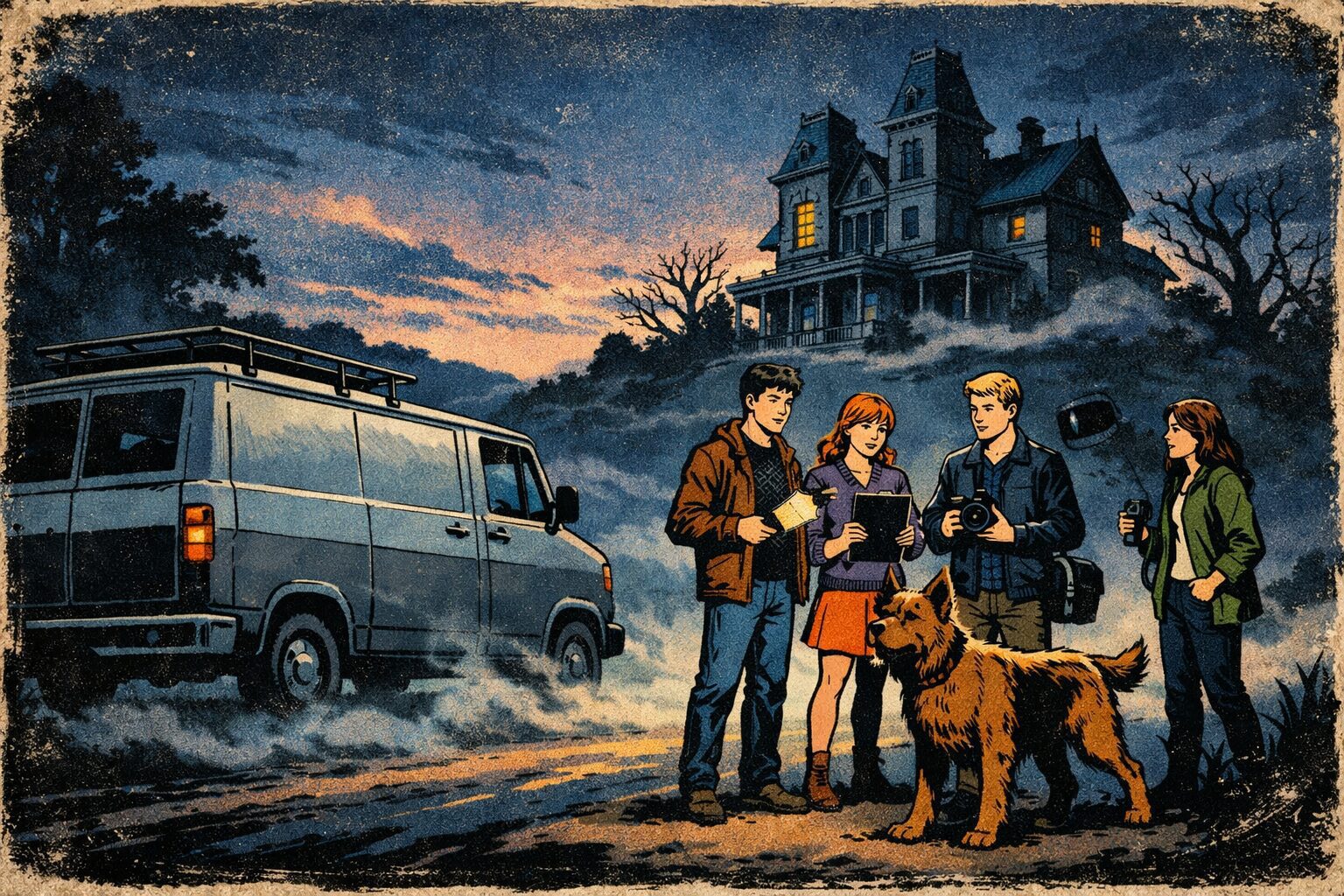
Scooby-Doo gets memed as “meddling kids running from a guy in a sheet.” But the gang is doing something most ghost hunters forget to do: They run a repeatable process. They show up, collect claims, test them, follow clues, and try to prove it’s normal before they ever decide it’s supernatural.
If you want to ghost hunt like Scooby Doo, you don’t need The Mystery Machine: You need a simple case file mindset.
1) Start a case file before you set foot inside
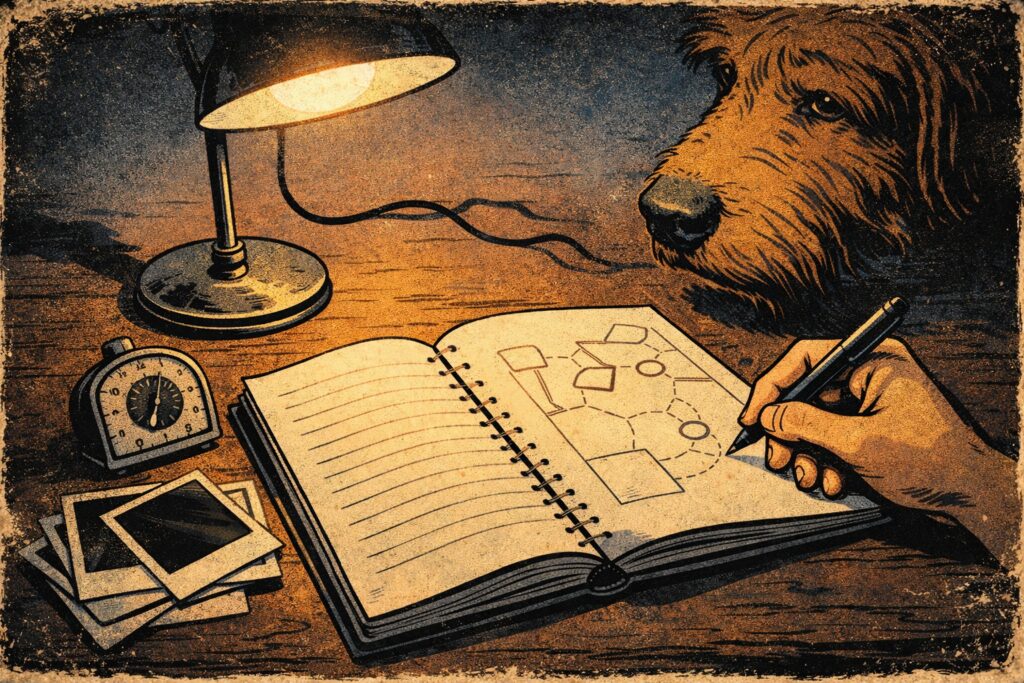
Every investigation begins with one question: What is being claimed? Not “is it haunted,” but “what happened, where, and when.” Kinda like a field reporter for a newspaper, eh?
Write down:
- The exact activity (footsteps, knocks, voices, shadows, cold spots, smells)
- The location (which room, which hallway, which corner)
- The timing (time of day, weather, dates, patterns)
- Who experienced it (separately, not as a group story)
A Scooby-style investigation will capture the why and how parts, if you’re thinking of how reporters do their jobs. When you write your report (like Scooby, of course), we’ll tackle another question.
Scooby rule: If the claim is fuzzy or vague, your investigation will be fuzzy and vague.
2) Research the location like it’s a cold case
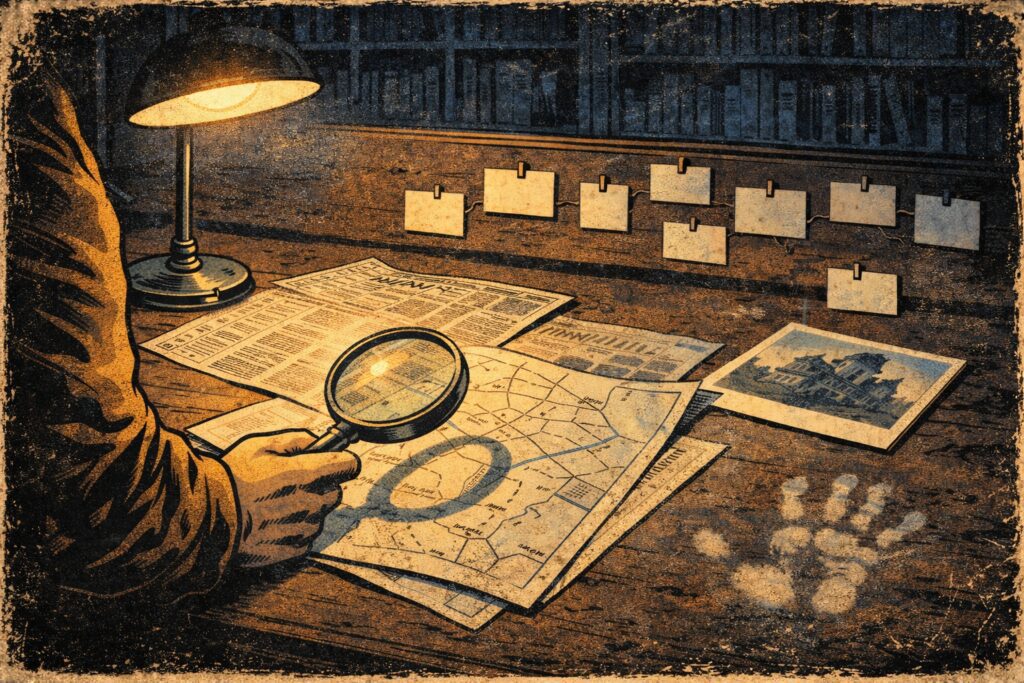
Scooby Doo always looks for a backstory (i.e., what’s really happened at the haunt). So should your investigation.
Look for:
- Property history (older uses, renovations, fires, accidents)
- Old maps and photos (layout changes explain a lot)
- Newspaper stories and public records (names, dates, real events)
Create a simple timeline and a quick hot spot map. The map can be hand drawn layouts. Bonus points if you also mark “boring but important” things like power panels, vents, plumbing walls, and stairwells. Remember, Scooby and the gang always look for natural explanations. They ARE debunkers at heart.
3) Show up with roles and rules
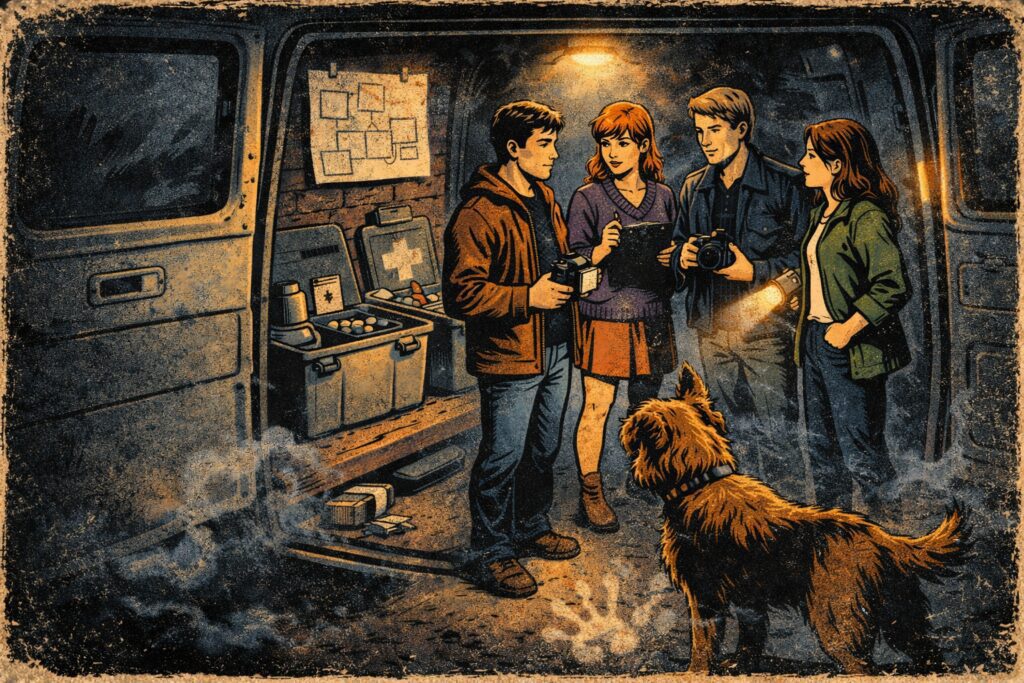
Most investigations fall apart because everyone is talking, wandering, and reacting at the same time.
Assign roles:
- Case lead: keeps the plan moving
- Safety lead: watches hazards and has “stop now” authority
- Tech: handles batteries, cameras, syncing time
- Scribe/timekeeper: logs everything with timestamps
Set rules:
- Don’t trespass. Get permission. Respect privacy.
- Use call-outs: if you move, cough, whisper, or bump something, say it out loud.
If Scooby can announce “Ruh-roh,” you can announce “That was me.” I like to assign roles to a team, especially if they’re newbs. It stops a lot of evidence contamination, and the focus …. errrrr …. helps them focus on the task at hand.
Small Teams Rule
I’ve always preferred to have a small team go into a haunt. By that, I mean less than 5 people. Once you get up to 8 or more folks, you can’t help but step on each other’s toes: Contamination creeps in, and your investigation becomes a tour instead of a hunt. Only take the number of ghost hunters you need for the location.
4) Baseline first (lights on, boring on purpose)
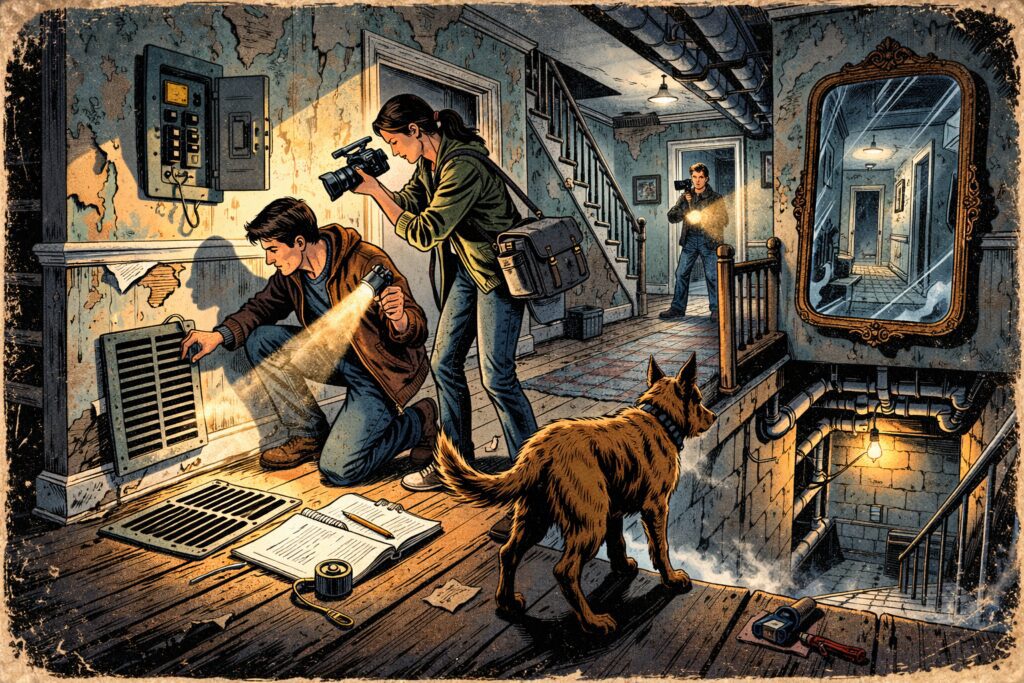
Before you try to “communicate,” learn what the place naturally does.
Do a quick walkthrough:
- Film the rooms and hallways
- Note creaky floor spots, rattling vents, loose windows
- Listen for traffic hum, dripping pipes, and HVAC cycling
Baseline work is where you catch the “normal, old building stuff” that could be a false positive. It’s important you do the baseline. I know it’s tempting to skip it when you have a short time to investigate. But do it. Take 5 minutes of experiment time to understand the space before you whip out the EMF meter.
5) Run the three-pass Scooby method
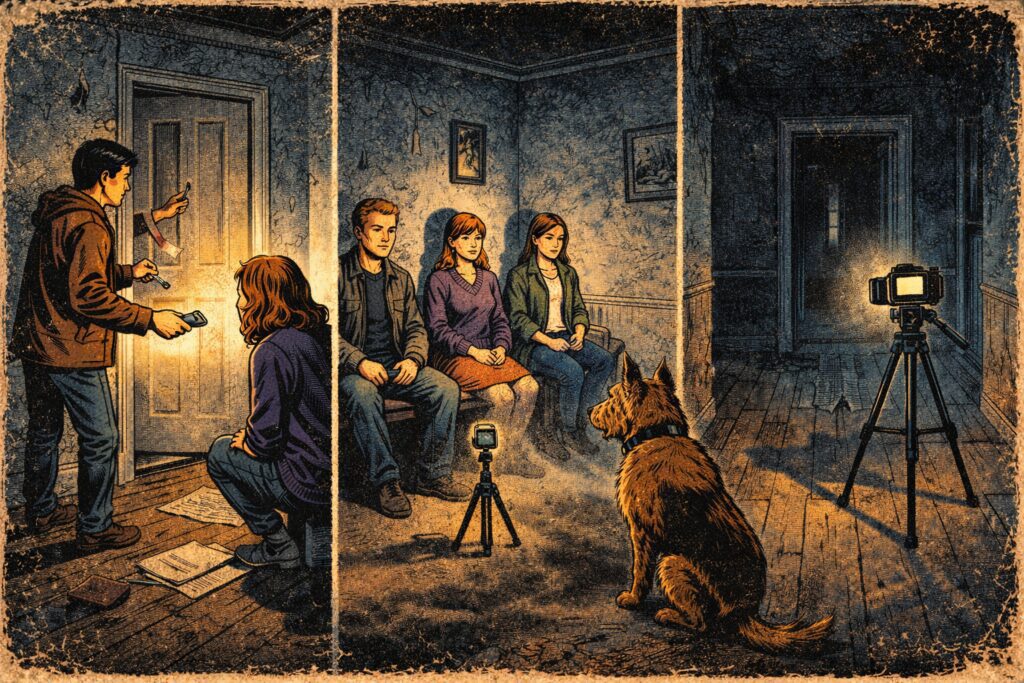
Let’s get to ghost hunting! Ok, Scooby-style uses a simple, 3-pass method.
Pass A: Debunk sweep
Try to recreate the reported activity with normal causes. Airflow, doors, plumbing, reflective surfaces, settling noises. Don’t assume. Test.
Pass B: Quiet monitoring block (10–20 minutes)
No talking. Minimal movement. Let the location do its thing. This is where you get clean audio for EVP and find patterns in activity.
Pass C: Targeted experiment (10–20 minutes)
Only run tests tied to the claims. Just focus on the reported activity. Don’t try to speculate. Capture what is, not what could be.
- Footsteps reported? Lock down a hallway with a static camera and stay still.
- Voices reported? Do a controlled Q&A with strict call-outs and a second recorder in a control area.
Then do a short post-session baseline. If activity spikes only when you’re chatting, you learned something.
6) Treat your evidence like it matters
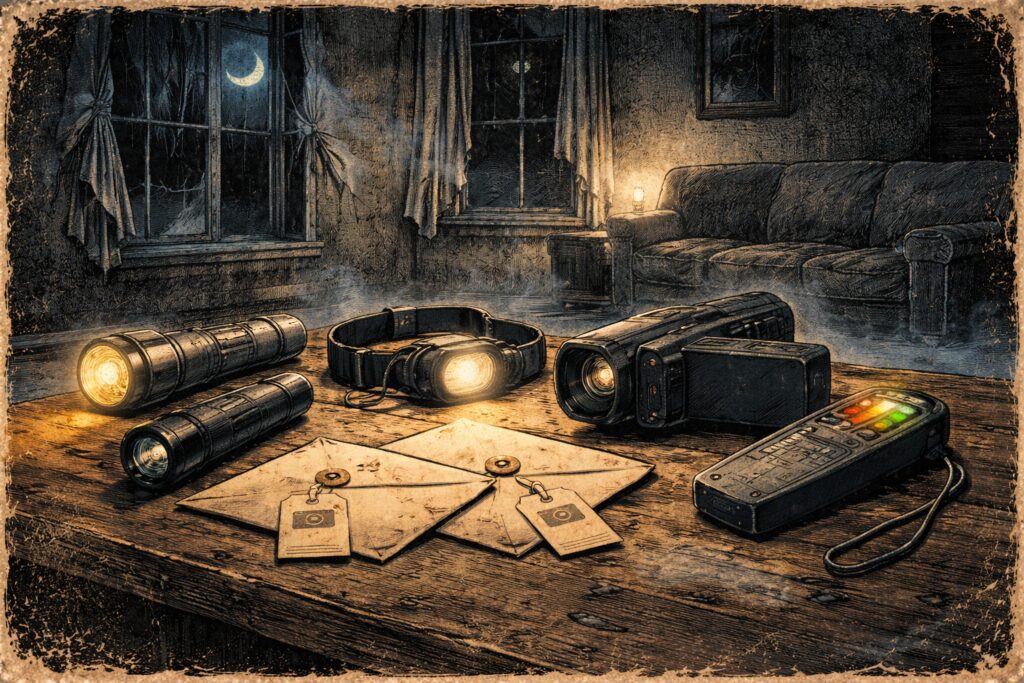
You don’t need a lab. You need consistency. A touch of persistence. A lack of interruptions. After all, going through hours of “tape” can get a bit dull.
Do these every time:
- Sync the time on your devices before you start (it makes editing and comparisons easier)
- Keep raw files untouched and work from copies (most editors allow you to keep files in place, so only copies get edited)
- Name files clearly (date, location, room, device help make file retrieval easier)
- Log timestamps for anything weird and anything human-caused (makes the edit easier and debunking easier)
Scooby rule: Evidence that can’t be traced belongs in a campfire story, not a ghost hunt report.
7) Analyze like a skeptic, even if you love ghosts
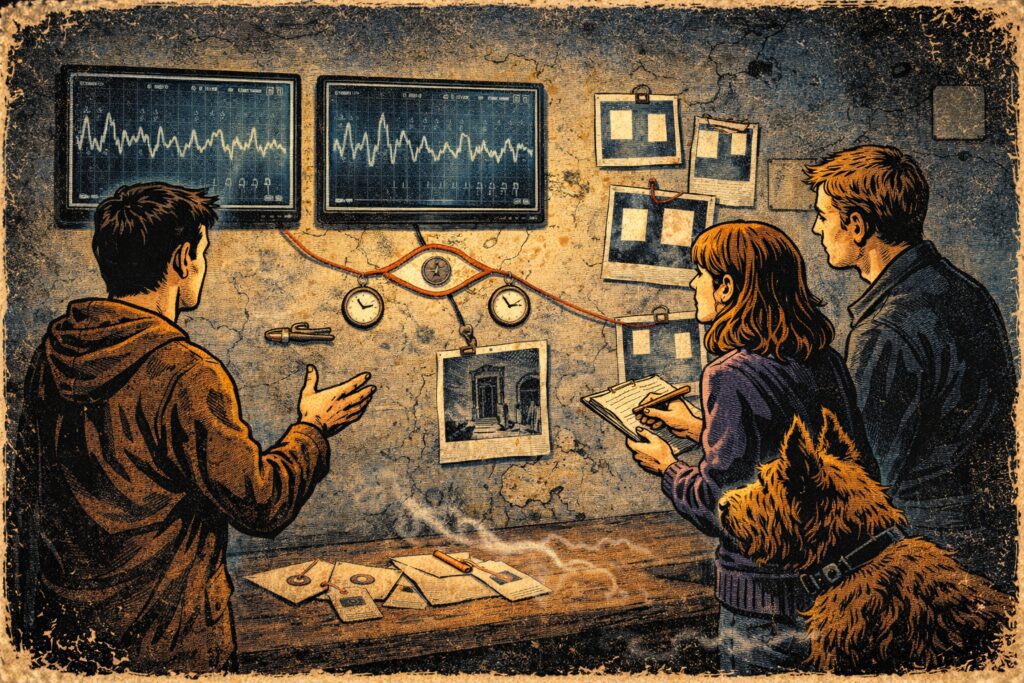
This is such an important task, especially for true believers, to ensure you’ve got the most credible ghostly evidence. Be brutally objective about the data you collected.
For each “hit,” ask:
- Can we reproduce it?
- Did anyone move or whisper near the mic?
- Was there an environmental trigger (HVAC, pipes, passing cars)?
- Do we have two sources matching the same moment (audio + video, two cameras, two recorders)?
A good personal standard:
- One anomaly = interesting
- Two anomalies with the same timestamp = actionable
- A repeatable pattern = evidence worth discussing
I mean, any time I see a light flicker; hear a gurgle; or feel heebie-jeebies, I go straight to “It’s a ghost!” But most likely it’s a burrito I ate earlier. Ugh. Evidence analysis can be a buzzkill sometimes.
8) Write the case report
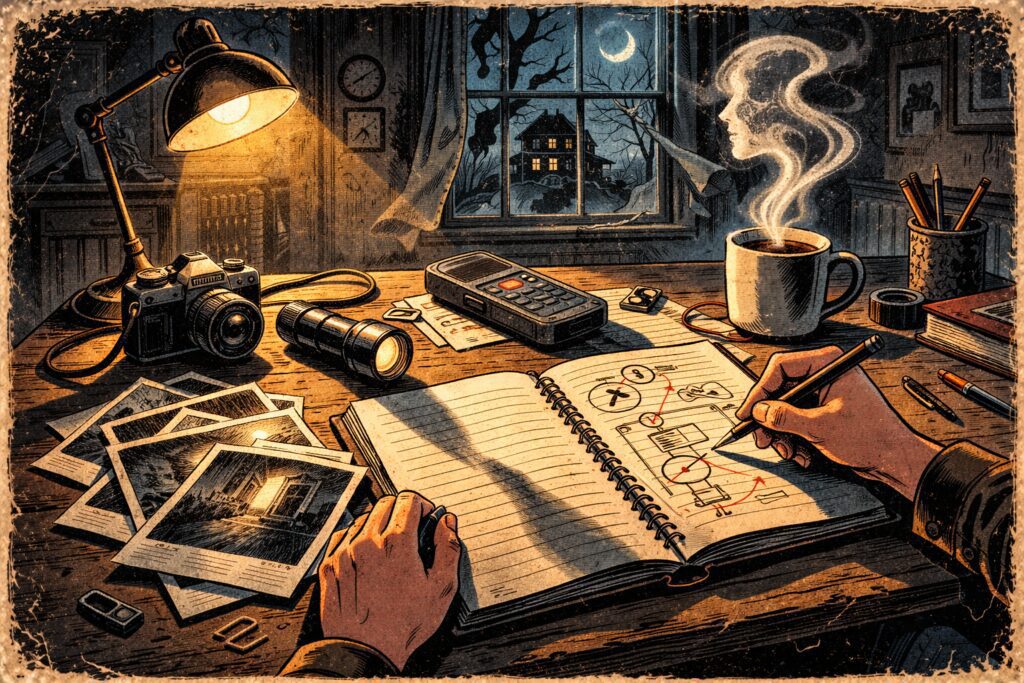
Scooby always wraps up with the reveal. You should wrap up with a report. If you don’t publish your findings, it’s hard to call yourself a mystery solver.
Include this info in your report:
- Summary of claims
- What you did (methods)
- What happened (results with timestamps)
- What you debunked
- Limits you experienced at the haunt or in your research
- Next steps (the “So what?!”)
Even if you catch nothing, you still get better by documenting what you tested. Now for the last question, the “So what?!” as in “what should I do with all this evidence and information?” It could mean you’ve solved the case or mystery. It may also mean you’ve got to do another ghost hunt. Let the folks know what you intend to do next. Even if it’s to hand over to another team.
Your Scooby starter kit
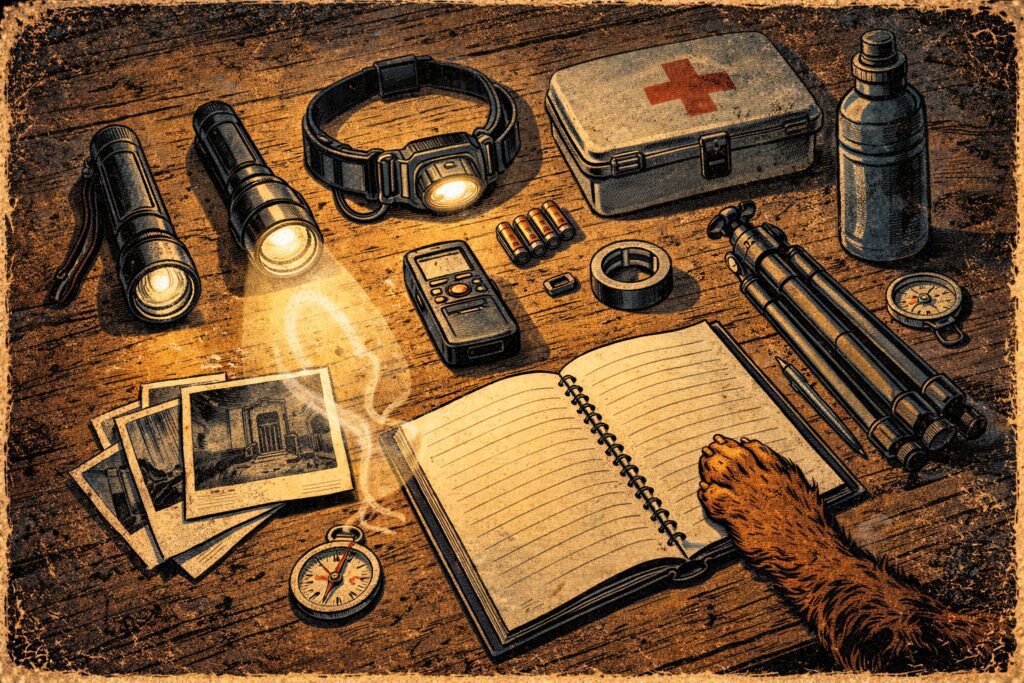
The Scooby Gang doesn’t use a lot of high tech gizmos while investigating. They keep it simple and use their brains and hunches quite a bit.
To do the Scooby method right, go with:
- Two flashlights + headlamp
- A dedicated audio recorder (plus a backup phone recorder)
- A video recorder (with your phone as a backup)
- Tripod (steady video beats “blurry footage” every time)
- Notebook or printed log sheets
- Extra batteries, tape, and basic safety supplies
- Snacks and coffee
You can add EMF meters later. Skill beats gear any day of the week.
The real Scooby-Doo secret
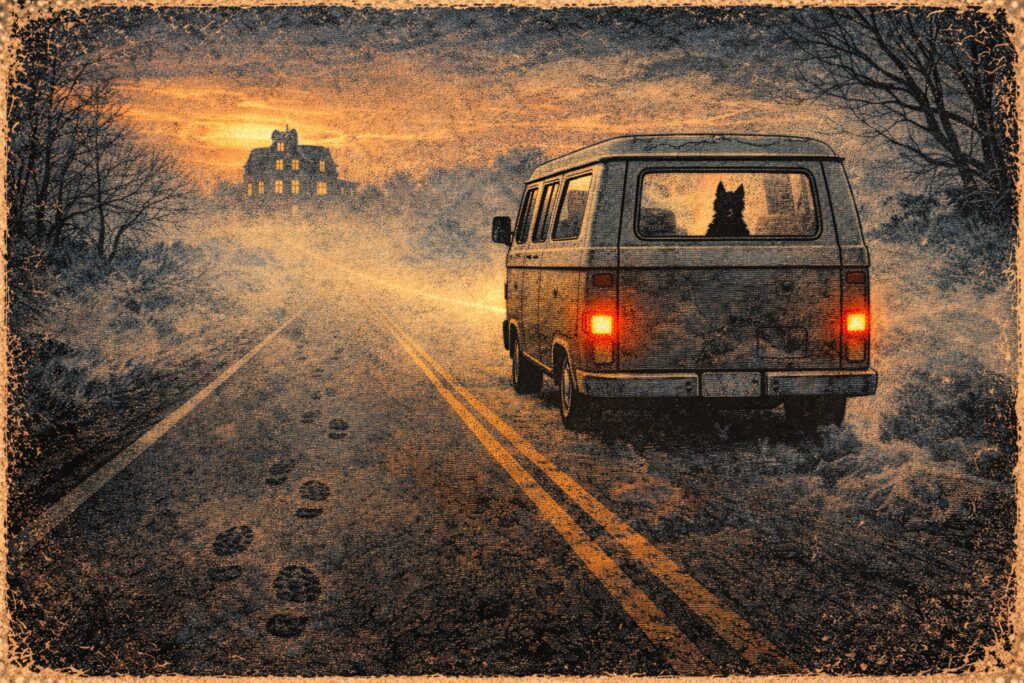
The gang doesn’t “prove ghosts.” They prove the story. They collect claims, test reality, follow patterns where they lead, and only then decide what’s “weird” at the end.
If you want to ghost hunt like Scooby Doo, do the same thing.
And yes… it’s usually the caretaker (that means a natural explanation).
What’s your favorite ghost hunting process or method? Have you ever investigated a haunt like Scooby and the gang? If so, let me know in the comments.
Discover more from GHOSTLY ACTIVITIES
Subscribe to get the latest posts sent to your email.