The Dark Folklore Behind The Horror Movie, Passenger

Table of contents
Hi gang! I just saw, Passenger, a horror movie about a hitchhiking demon terrorizing van-lifers driving cross-country. Before I get too into the weeds about its folklore, check out the trailer.
Passenger Movie Trailer
And now back to our regularly scheduled programming …
Like many good horror movies, it borrows a lot from folklore … but the movie invents some new movie-lore (you know, plussing up the legends and lore for jump scares). I invented that … internally giggling at my own bad joke.
Instead of making up everything from scratch, the filmmakers weave together real traditions about travelers, ghostly hitchhikers, roadside symbols, and the patron saint of travelers. The result feels believable because parts of it are rooted in history. We’re familiar with the lore … even if it doesn’t go by documented folklore.
Let’s separate the real folklore from the Hollywood fiction.
Warning: Light Spoilers Ahead!!!
The Hobo Code Was Real
One of the most interesting parts of the movie is its use of mysterious symbols left along roads and buildings. That’s the part where Maddie, the lead female character, picks up a copy of Haunted Highways of America in the antique store.
These are inspired by the Hobo Code, a real system of markings used by traveling workers during the late 1800s and early 1900s. Hobos scratched simple symbols onto fences, bridges, and railroad structures to help others survive life on the road.
Some symbols warned of danger. Others marked safe places to sleep, homes where food might be offered, or areas where police were active.
The movie gives these symbols a supernatural twist. Instead of helping travelers, they become warnings connected to the demon. That’s pure fiction but it’s built on a real piece of American history. For example, the stickman with 3 diagonal lines symbol at the first van meetup is an invention for the movie.
St. Christopher: Protector of Travelers
The cross and medal of St. Christopher also play an important role in the film.
For centuries, Christians have considered St. Christopher the patron saint of travelers. Drivers, sailors, hikers, and pilgrims have carried St. Christopher medals for protection during long journeys.
According to tradition, Christopher carried travelers across a dangerous river. One day, a small child asked to be carried across. As they crossed, the child became impossibly heavy. Christopher later learned he had carried Christ himself.
The story became a symbol of faith, protection, and safe travel.
This story gets a twist in the movie: St. Christopher had travelled with a monk but then the monk shrieks when he sees the cross. The monk is actually the demonic entity, dressed as a holy man to trick other travellers. It reminds us not to trust false prophets and to use our free will to question those who represent God.
While the movie invents its own mythology, it borrows the long-standing belief that St. Christopher watches over people on the road.
The Demon Is Part Ghost Story, Part Urban Legend
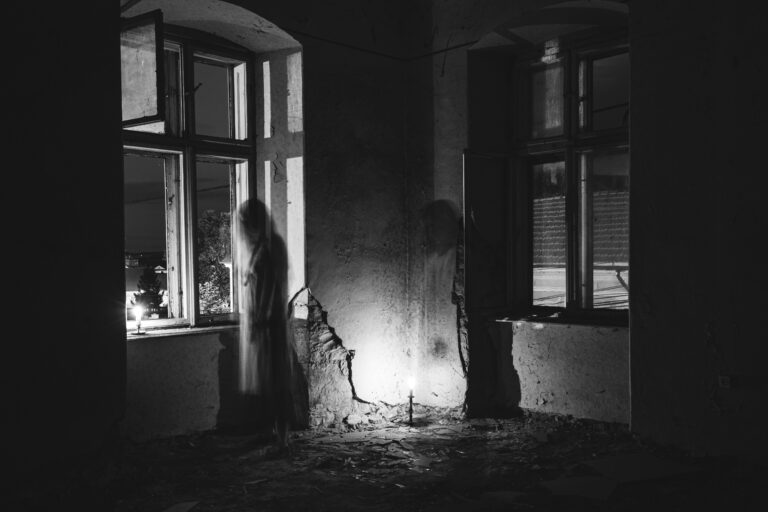
There isn’t an old legend about a creature exactly like the demon in Passenger. Instead, it combines several pieces of folklore. The biggest influence is the phantom hitchhiker.
This is one of the world’s most famous ghost stories. A driver picks up a lonely traveler on a dark road. After driving for several miles, the passenger suddenly disappears. Later, the driver learns the hitchhiker died years before.
Versions of this story have been told across North America, Europe, and Asia for generations.
The movie takes that familiar idea and asks a frightening question: What if the hitchhiker wasn’t a ghost… but something much worse?
Why Highway Folklore Is So Common
Roads have always inspired ghost stories. Travel means leaving the safety of home. You meet strangers. You pass lonely places. You make decisions without knowing who, or what, you might encounter.
Long before highways existed, people told stories about haunted crossroads, wandering spirits, and supernatural travelers. Today’s ghost hitchhiker is simply a modern version of those older legends.
And folklore tales have mainly been used for protection and safety. For example: Before a long road trip, you’d get the car serviced; you’d pack some snacks; you have a spare tire; you have your insurance up-to-date … blahblahblah.
That’s part of what makes Passenger so effective. It mixes ancient fears with the modern age. Speaking of which …
The Rules of the Road
Whether you believe in demons or not, folklore often teaches practical lessons through supernatural stories. Passenger follows that tradition.
Here are the “rules” suggested by the movie, and the common-sense ideas hiding underneath them.
Don’t Pick Up Strangers
Folklore: A mysterious traveler may not be who they appear to be.
Common sense: Never pick up hitchhikers. If someone appears to need help, call 911 or local authorities instead of putting yourself in danger.
Be Careful At Lonely Roadsides
Folklore: Evil waits where people are isolated.
Common sense: Criminals sometimes target motorists on quiet roads. Stay aware of your surroundings, especially at night.
Trust Your Instincts
Folklore: The hero survives because they recognize something isn’t right.
Common sense: If a situation feels wrong, leave. Your intuition often notices warning signs before your conscious mind does.
Travel Prepared
Folklore: Travelers carried protective charms such as a St. Christopher medal or a blessed cross.
Common sense: Keep your vehicle maintained, carry a flashlight, first-aid kit, charged phone, water, and let someone know where you’re going on long trips.
Help Safely
Folklore: Compassion can invite danger.
Common sense: Helping people is admirable, but do it safely. Call emergency services, stay inside your locked vehicle if necessary, and avoid placing yourself in harm’s way.
Why These Stories Endure
Whether the threat is a demon, a ghostly hitchhiker, or simply a dangerous stranger, road folklore reminds us that travel always carries uncertainty.
That’s probably why these legends never disappear. They evolve with each generation, replacing haunted crossroads with lonely highways and horse-drawn wagons with camper vans.
The monsters change. The lesson stays the same.
Fact vs. Fiction
Here’s a quick breakdown:
- Hobo Code: Real.
- St. Christopher as the patron saint of travelers: Real.
- Phantom hitchhiker folklore: Real.
- A highway demon that marks victims with hobo symbols: Fiction created for the movie.
The next time you stop to help someone on a lonely highway, you’ll probably remember that.
Hopefully, that’s all you’ll remember.
Bibliography
Brunvand, Jan Harold. The Vanishing Hitchhiker: American Urban Legends and Their Meanings. W. W. Norton & Company, 1981.
Farmer, David Hugh. The Oxford Dictionary of Saints. 5th ed., Oxford University Press, 2011.
Jacobus de Voragine. The Golden Legend. Translated by William Granger Ryan, Princeton University Press, 1993.
National Security Agency – Hobo Communications: A Brief History of Hobos and Their Signs — A concise history of American hobo culture and the symbols associated with railroad travelers.
New Advent Catholic Encyclopedia – St. Christopher — Historical background on St. Christopher, including the traditional legend and his role as the patron saint of travelers.
Botkin, B. A., editor. A Treasury of American Folklore. Crown Publishers, 1944.
Merriam-Webster. “Hobo” Dictionary Entry — Modern definition and historical usage of the term “hobo.”
Thanks for reading my take on the demon from Passenger. If you’ve encountered a ghostly traveller, let me know about it in the comments below. Much appreciated and take care!