13 Creepy Water Spirits From Around the World

Water is calm. Water is peaceful. But it can also be deadly. People have always told stories about strange things living in rivers, lakes, and oceans. These aren’t just fish tales. They’re warnings passed down for generations. Get more about these water spirits after the jump.
Some water spirits heal. Others destroy. Some just like to mess with you. In this list, you’ll meet 13 spooky water spirits from all over the world. You’ll learn where they came from, what they look like, and what to do if you ever meet one.
Let’s dive in.
Table of contents
- Mami Wata (West and Central Africa)
- Kappa (Japan)
- Nøkken (Scandinavia)
- Selkies (Scotland and Ireland)
- Ahuizotl (Aztec)
- Rusalka (Slavic Countries)
- Vodyanoy (Slavic Countries)
- Kelpie (Scotland)
- Each Uisge (Scotland)
- Naiads (Greece)
- Nix / Nixe (Germany & Scandinavia)
- Lorelei (Germany)
- Mannegishi (Cree People – Canada)
- Conclusion: Don’t Go Near the Water Alone
- Sources
Mami Wata (West and Central Africa)

Mami Wata means “Mother of Water.” She’s a famous spirit found in many African cultures. People have honored her for hundreds of years. Some say her image changed over time—mixing with pictures brought by traders from Europe and India. Still, her role stayed the same. Mami Wata is powerful. She brings healing, good fortune, or disaster, depending on how you treat her.
What She Looks Like
Mami Wata is stunning. Most say she’s half-woman, half-fish—like a mermaid. Others say she’s a full woman with long hair, glowing skin, and a snake wrapped around her. She always looks rich. Mirrors, perfume, and fancy jewelry often surround her. But don’t let her beauty fool you. She’s not evil, but she doesn’t like disrespect.
What To Do If You Meet Her
Be polite. Don’t stare. Don’t laugh. And if she offers you something, don’t say no. People often leave gifts—like flowers, coins, or perfume—to stay on her good side. Some believe if she appears in your dream or pulls you underwater, she might be choosing you for something special. If that happens, talk to a spiritual leader for help.
Kappa (Japan)

Kappa are water creatures from Japan. Stories about them go back hundreds of years. They’re part of old beliefs about nature spirits, known as yokai. Some people say Kappa are just pranksters. Others say they’re deadly. They often show up in legends about children getting dragged into rivers.
What They Look Like
Kappa are short and human-shaped. They have green, scaly skin, webbed hands and feet, and a shell on their back like a turtle. Their weirdest feature? A bowl-shaped dent on top of their head filled with water. That’s their power source. If the water spills, they lose their strength. Even though they look funny, they’re super strong and dangerous.
What To Do If You Meet One
Your best bet? Bow. Kappa are obsessed with manners. If you bow, they’ll bow back—and spill the water from their head. That gives you time to escape. Don’t swim alone in rivers or ponds, especially at dusk. If you live near a place known for Kappa legends, people say you can throw cucumbers into the water to keep them happy.
Nøkken (Scandinavia)

The Nøkken is a creepy spirit from Norway and Sweden. People believed he lived in lakes and rivers. Stories say he plays haunting music to trick people into coming close. Once they’re near the water, he pulls them under. The tales are really old—some go back to Viking times.
What He Looks Like
The Nøkken can change how he looks. He usually appears as a handsome man sitting near water, playing a fiddle. His music is sad and beautiful—and it draws people in. But he can also turn into a black horse or even a water-logged corpse. Sometimes, he has glowing eyes or slimy skin.
What To Do If You Meet Him
If you hear music near water and no one’s around—leave. That’s your only warning. Old stories say carrying steel or a Bible can protect you. Some people say you can break the spell by calling out the Nøkken’s name, but that could also make him notice you. Best not to take chances. Stay away from deep water at twilight.
Selkies (Scotland and Ireland)
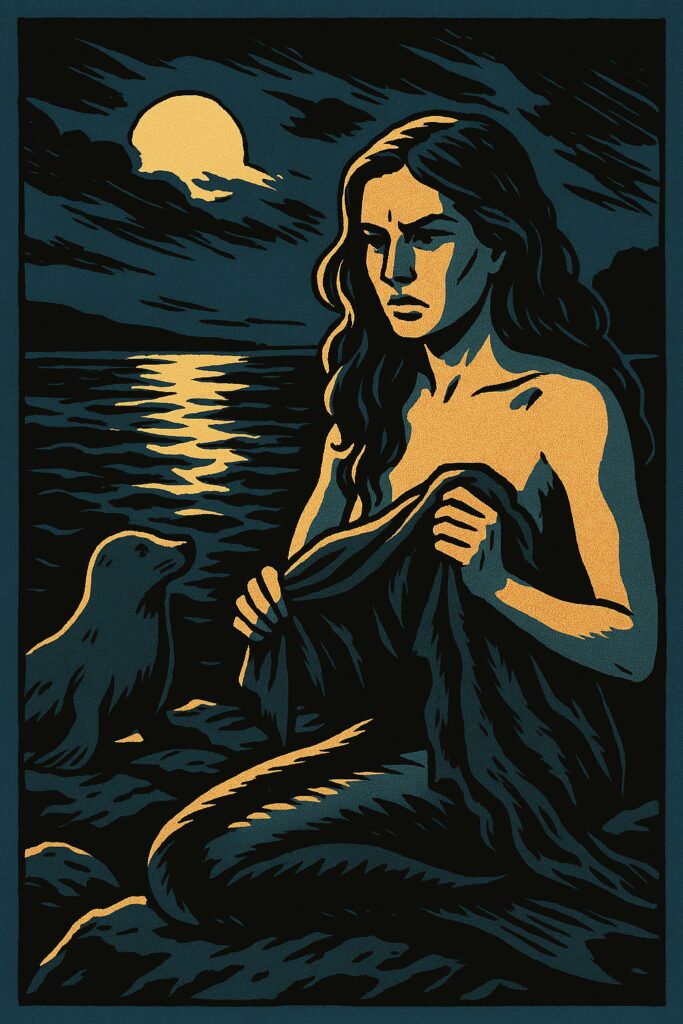
Selkies are seal-people. They come from stories told in Scotland and Ireland, especially on the coast. In the sea, they’re seals. But they can come on land and take off their seal skins to become human. Most stories are about love—and heartbreak.
What They Look Like
Selkies look like regular seals in the water. On land, they turn into beautiful humans. Their seal skin is magical. If someone hides it, they can’t return to the sea. A lot of old stories talk about men stealing a selkie’s skin to make her stay and marry them. But selkies never stop longing for the ocean.
What To Do If You Meet One
Don’t steal the seal skin. That’s the big rule. If you find one, walk away. If you give it back to a selkie, some stories say you’ll get a blessing. Selkies aren’t dangerous unless you trap them. Then the sorrow they bring can ruin a life.
Ahuizotl (Aztec)

The Ahuizotl comes from Aztec mythology. It lived in lakes and rivers and served Tlaloc, the god of rain. People feared it. If someone went missing near water, the Ahuizotl usually got the blame. Spanish explorers wrote about it in early reports.
What It Looks Like
It looks like a dog or small bear with human-like hands. But the weirdest part? It has a hand on the end of its tail. That’s how it grabs people. It makes sounds like a crying baby to trick travelers into coming close. When they do—it pulls them in and drowns them. Then it eats their eyes, teeth, and nails. Creepy.
What To Do If You Meet One
If you hear a baby crying near a lake or river, think twice. The Ahuizotl uses that sound to lure people in. Stay away from lonely shorelines at night. If you feel like something’s watching you, don’t ignore it. In old Aztec culture, people taken by this spirit were sometimes honored—but only if they didn’t survive. If you do escape, you’re lucky.
Rusalka (Slavic Countries)

Rusalki are from Slavic folklore. Long ago, they were seen as spirits of nature that helped crops grow. But over time, their image changed. Now, they’re mostly known as ghosts of women who died in water—often from heartbreak, betrayal, or suicide.
What They Look Like
Rusalki look like beautiful young women with pale skin and long hair. Sometimes, their hair is green, like pond weeds. They sit near rivers or lakes, brushing their hair and singing softly. But that beauty hides something deadly. When someone gets too close, they grab them and drag them under the water.
What To Do If You Meet One
Don’t follow singing voices near the water, especially at night. Rusalki are strongest around dusk. Some people believe carrying garlic, iron, or crosses can keep them away. If you think a Rusalka is watching you, leave right away. These spirits don’t forgive easily.
Vodyanoy (Slavic Countries)

The Vodyanoy is another water spirit from Slavic legends. He lives in ponds, rivers, and old millstreams. People used to leave offerings for him—especially fishermen and millers. They wanted to avoid his wrath and keep the waters calm.
What He Looks Like
The Vodyanoy is creepy-looking. He’s an old man with a green beard, frog face, and a body covered in pond muck. He’s got webbed fingers and glowing red eyes. Sometimes, he sits on a half-sunken log, smoking a pipe. He likes to pull people into deep water if they disturb him.
What To Do If You Meet Him
Don’t swim alone in ponds or near old mills. If you see bubbles in calm water or hear strange splashes, get away. Some people threw bread or tobacco into the water to keep him happy. If you’re respectful, he might leave you alone. But if you act like you own the place, he’ll make sure you don’t come back.
Kelpie (Scotland)
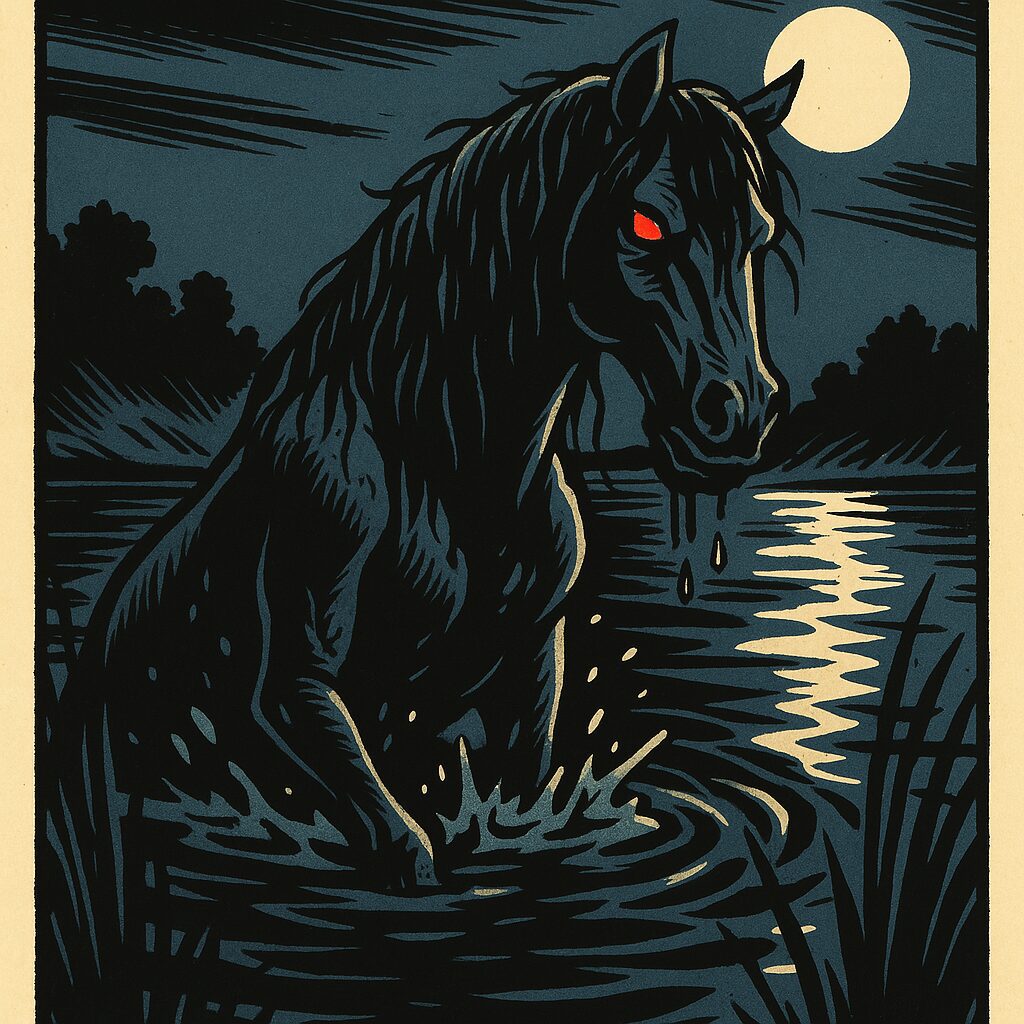
Kelpies are famous in Scottish legends. They live in rivers and streams. Most stories were told to warn children not to play too close to the water. But these spirits aren’t just for kids—they’re deadly for anyone.
What It Looks Like
A Kelpie usually looks like a big, black horse standing near the water. Its coat is always wet. Its eyes are wild. If you touch it, your hands get stuck to its skin. Once someone climbs on its back, it races into the river and drags them under.
What To Do If You Meet One
If you see a horse alone by a river, don’t go near it. Some people say Kelpies sometimes have more than four legs—so count them. Carrying iron is supposed to protect you. But the best advice? Just walk away. Kelpies are fast, smart, and hungry.
Each Uisge (Scotland)

Each Uisge (pronounced “ech oosh-ka”) is like a Kelpie, but worse. It lives in sea lochs and the ocean. It’s one of the most feared creatures in Scottish folklore. It doesn’t just drown people—it eats them.
What It Looks Like
Like the Kelpie, it can look like a horse. But it can also turn into a handsome man or a big bird. No matter the form, it tries to lure people close. Once someone touches it, they’re stuck. The creature then dives into the water. Only the victim’s liver ever floats back up.
What To Do If You Meet One
Don’t trust anything that looks too perfect near the ocean—horse, man, or animal. If someone seems off and has seaweed in their hair or wet footprints, stay far away. Some say salt or steel might stop it. But once it has you, there’s no escape. Keep your distance.
Naiads (Greece)
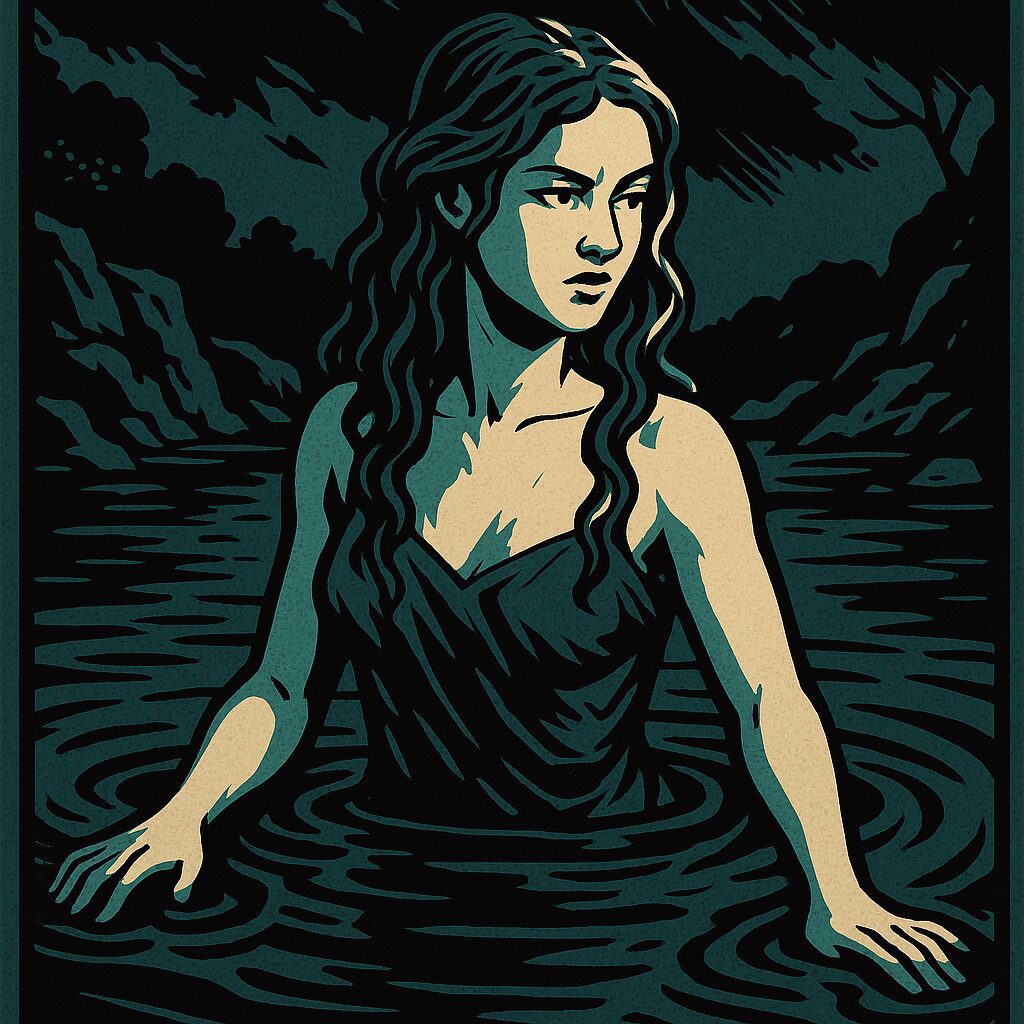
Naiads are freshwater spirits from Greek mythology. They live in rivers, lakes, springs, and fountains. In ancient times, people worshipped them. Some were helpful and kind. Others weren’t so friendly—especially if you messed with their water.
What They Look Like
Naiads are graceful, beautiful women. They’re tied to the water where they live. They might appear out of a spring or sit on rocks by a stream. Their looks are calm and inviting. But if they’re angry, they can pull people under or curse them.
What To Do If You Meet One
Be respectful near natural springs or quiet pools. Don’t throw trash or insult the water. In old times, people left wine, honey, or flowers as gifts. If you see a woman standing in still water, don’t talk to her. She may not be what she seems.
Nix / Nixe (Germany & Scandinavia)

The Nix (male) and Nixe (female) come from German and Scandinavian stories. People believed they were water spirits that lived in rivers and lakes. Most legends say they use music to lure people into the water. These tales were popular in the Middle Ages and warned people to stay away from deep or still water.
What They Look Like
The Nix is usually a handsome man who plays a violin or harp near the water. The Nixe is often described as a beautiful woman or mermaid. Both use their music to entrance people. Some stories say they can change into fish, snakes, or other animals if they want to hide.
What To Do If You Meet One
If you hear music but don’t see anyone around—walk the other way. Don’t talk to strangers who appear near the water, especially if they’re singing or playing an instrument. Old legends say that carrying steel or calling out the spirit’s name might break their spell. But honestly, just staying away is your safest move.
Lorelei (Germany)
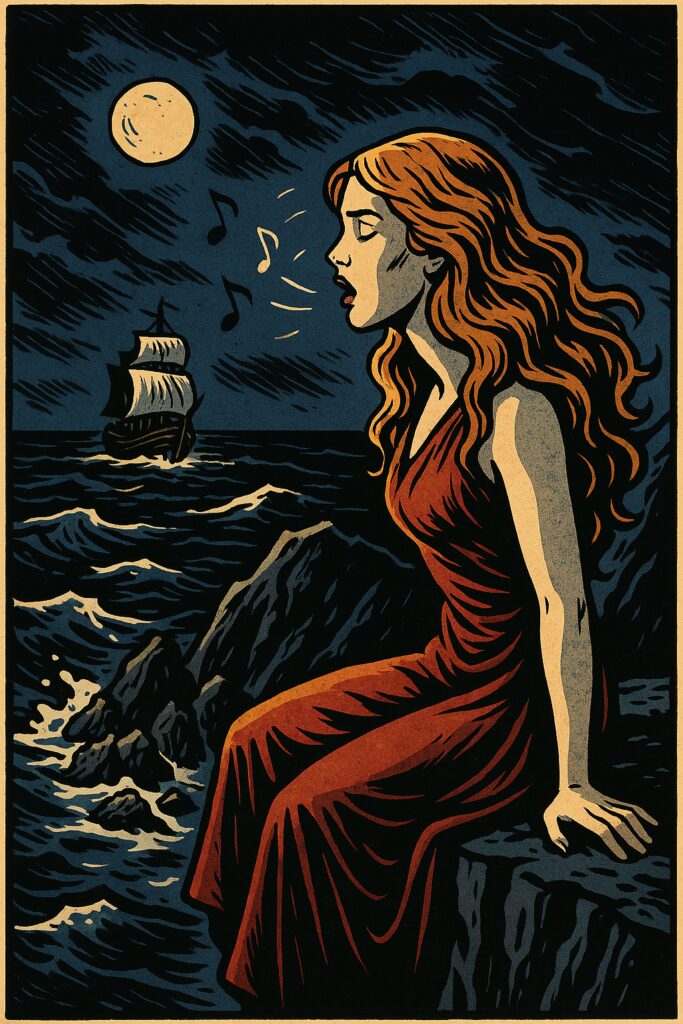
Lorelei is a spirit tied to a cliff along the Rhine River in Germany. Her story became famous through poems and songs in the 1800s. She’s kind of like a river siren. Sailors blamed her for shipwrecks caused by sharp rocks hidden in the water.
What She Looks Like
Lorelei usually appears as a woman with golden hair, sitting high on the cliff. She sings a sad song that makes boatmen forget to steer. Her voice is beautiful, but it’s a trap. Many boats crashed below her rock because people got distracted listening.
What To Do If You Meet Her
If you’re on the water and you hear singing from up high, stay focused. Don’t look up. Don’t stop what you’re doing. Some boaters used to bring loud whistles or drums to block out her voice. You don’t want to be another name on her list.
Mannegishi (Cree People – Canada)

The Mannegishi come from Cree legends. These little people live in the rocky areas near rivers. They aren’t evil, but they love playing tricks. They’ve been part of Indigenous stories for generations. They’re blamed for flipped canoes and missing paddles.
What They Look Like
Mannegishi are small, thin beings with big heads and wide grins. They’re bald and sometimes have extra fingers or toes. Their eyes are large and dark. They live in the cracks between river rocks and only come out to play pranks—or cause a little chaos.
What To Do If You Meet One
Don’t laugh at the river or skip rocks in places people consider sacred. That’s a good way to get on their bad side. Some traditions say offering tobacco or sweetgrass shows respect. If your boat flips for no reason, you might want to leave a gift and move on.
Conclusion: Don’t Go Near the Water Alone
Rivers. Lakes. Oceans. They all have something in common—mystery.
People have shared these stories for centuries. Maybe to explain strange disappearances. Maybe to warn others. Maybe just to remind us that water, while beautiful, can be deadly.
So next time you’re near deep water and feel like something’s watching … trust your gut. Don’t follow voices. Don’t accept strange gifts. And definitely don’t climb onto that lonely horse.
These spirits may be legends and lore—but their stories could still save your life.
Sources
Bane, Theresa. Encyclopedia of Spirits and Ghosts in World Mythology. McFarland & Company, 2016.
Beresford, Matthew. The White Devil: The Werewolf in European Culture. Reaktion Books, 2013.
Brunvand, Jan Harold. The Encyclopedia of Ghosts and Spirits. W. W. Norton & Company, 1994.
Clute, John, and John Grant. The Encyclopedia of Fantasy. St. Martin’s Griffin, 1997.
Evans-Wentz, W. Y. The Fairy-Faith in Celtic Countries. Oxford University Press, 1911.
Guerber, H. A. Myths and Legends of the Norse. Dover Publications, 1992.
Leeming, David. The Oxford Companion to World Mythology. Oxford University Press, 2005.
McCoy, Edain. Celtic Myth and Magick: Harnessing the Power of the Gods and Goddesses. Llewellyn Publications, 1995.
Monaghan, Patricia. The Encyclopedia of Celtic Mythology and Folklore. Facts on File, 2004.
Pócs, Éva. Between the Living and the Dead: A Perspective on Witches and Seers in the Early Modern Age. Central European University Press, 1999.
Rose, Carol. Spirits, Fairies, Leprechauns, and Goblins: An Encyclopedia. W. W. Norton & Company, 1996.
Turner, Patricia, and Charles Russell Coulter. Dictionary of Ancient Deities. Oxford University Press, 2001.
Walker, Barbara G. The Woman’s Encyclopedia of Myths and Secrets. HarperOne, 1983.