Ghost Hunting & Legend Tripping In Bucoda

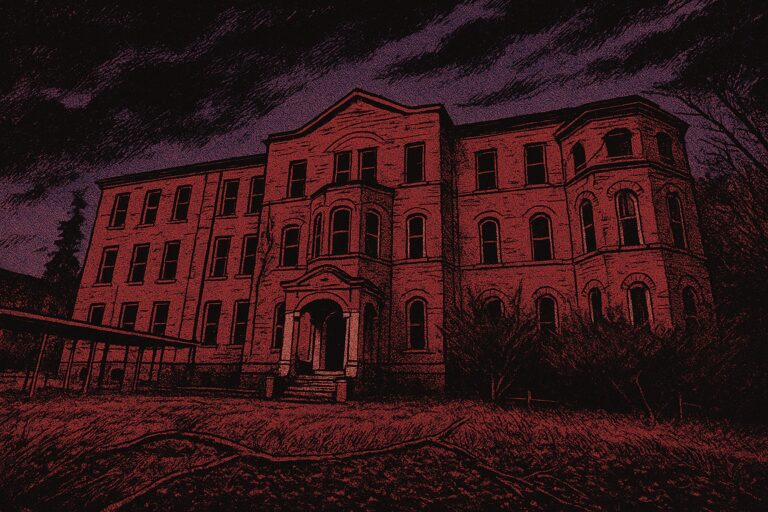
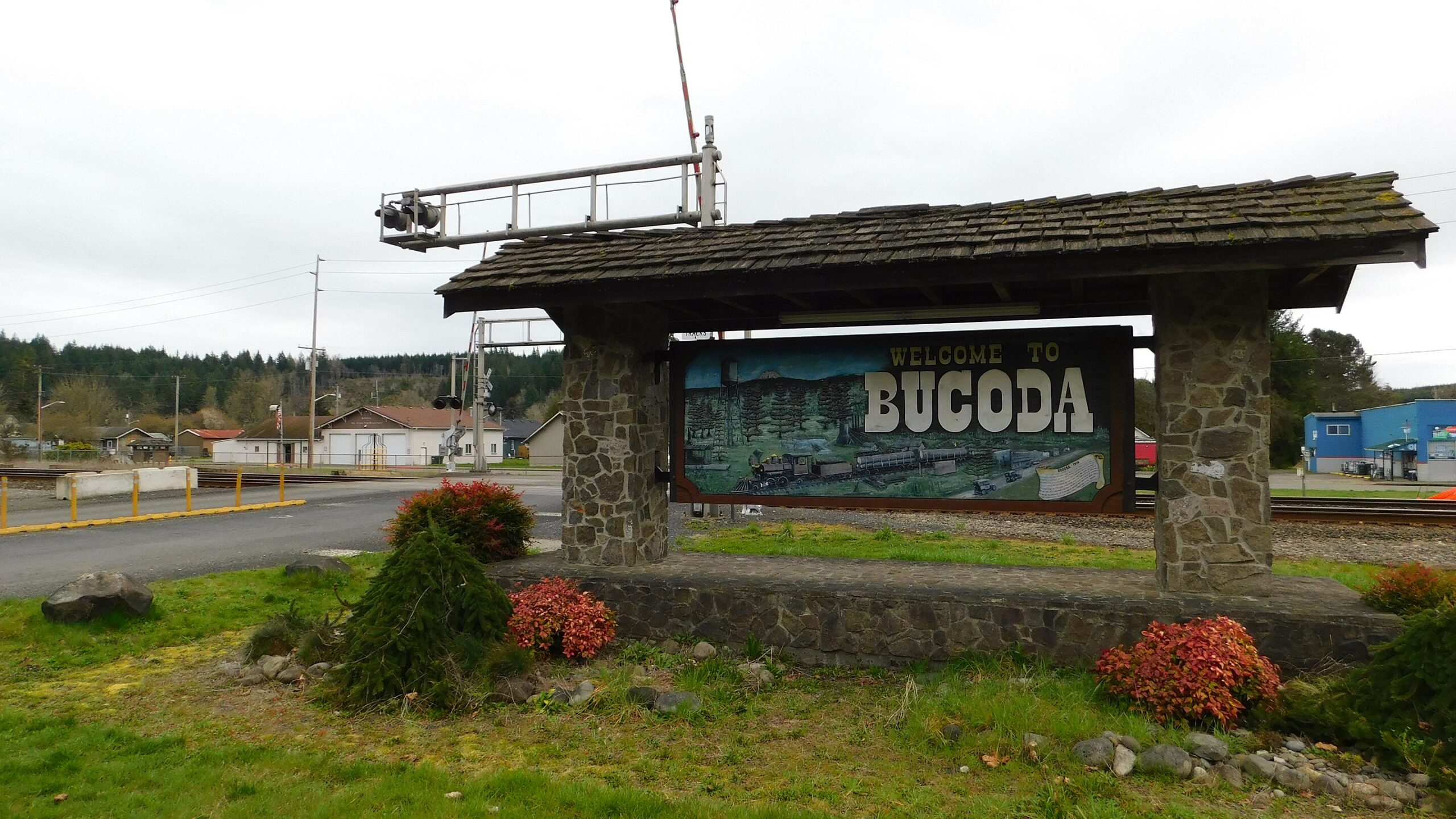
On March 14th, 2026, the Ghostly Club headed to Bucoda, Washington to examine 2 urban legends associated with the allegedly cursed town. Follow along after the jump.
Table of contents
Bucoda Before Bucoda: When the Town Was Seatco
Before Bucoda became Bucoda, it was Seatco. That older name already carried a strange reputation. HistoryLink notes that the area was known to Native people as Seatco, and later writers claimed the name referred to a ghost or devil. At the same time, a reminiscence by Nisqually tribal member Henry Sicade described the local people as “Siatco” and associated them with magical powers. So the spooky meaning is part of the lore, but it is probably smartest to present it as tradition and interpretation, not settled fact.
The town began as a rough little industrial settlement on the Skookumchuck River. In 1856, Aaron Webster secured land there, and in 1857 he started a sawmill. Later, Oliver Shead took over the mill interests and helped push the settlement into something more permanent. He established the Seatco post office in 1870, and when the Northern Pacific Railroad came through in 1872, the place started to grow. Coal mining, lumber work, and other businesses followed. Seatco was never just a sleepy crossroads. It was a working town built on timber, transport, and extraction.
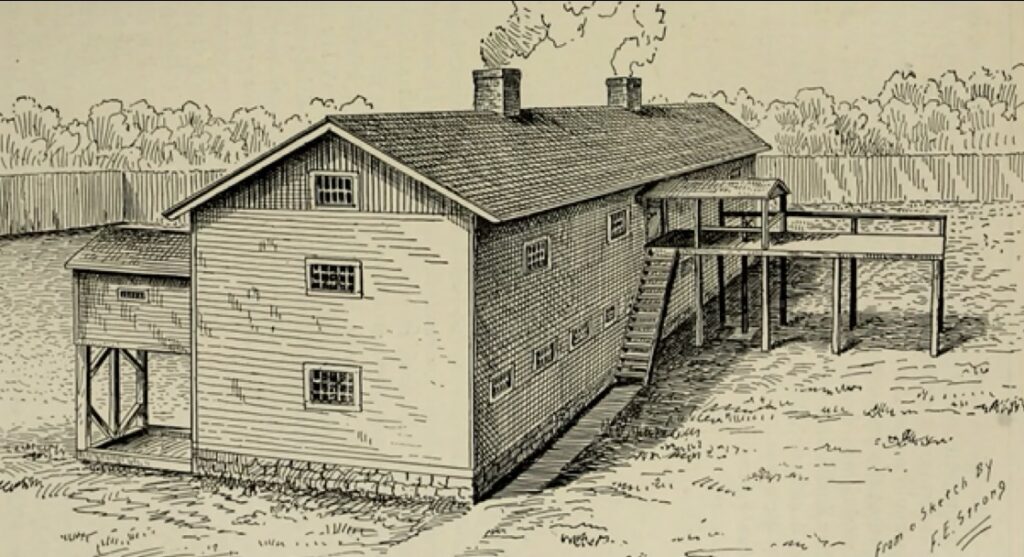
Then came the part of the story that still hangs over Bucoda like a storm cloud. In the late 1870s, Shead joined Pierce County Sheriff Jeremiah Smith and Thurston County Sheriff William Billings in building a private territorial prison at Seatco. HistoryLink says the legislature accepted the proposal in 1877 and the prison opened in 1878. The Washington State Archives describes it as a privately run prison near present-day Bucoda and notes that prisoners were contracted out as laborers for seventy cents a day. The archives also say their records contain more than 500 inmate entries tied to the prison.
Seatco Prison was the kind of place that could seed a curse story all by itself. The National Register form describes a harsh wooden structure with thick plank walls, unheated cell areas, glassless barred windows, straw ticks for beds, and buckets for sanitary use. George France, a former inmate, described the place in brutal terms, and the same federal form preserves his line about leaving Washington’s “hell on earth;” It’s even on a cemetery placard in nearby Tenino. This was not a town legend invented a century later for Halloween fun. Seatco earned a dark name in its own time.
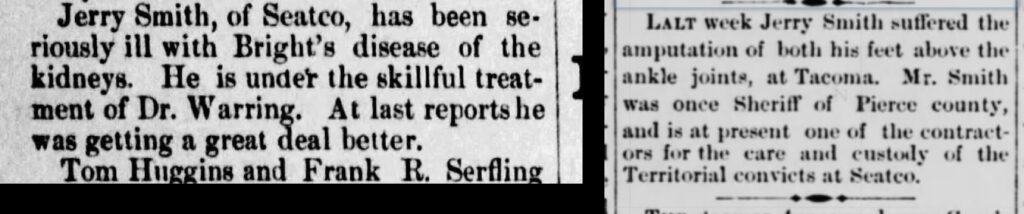
That prison also gave the town one of its earliest curse legends. The National Register form records a local tradition that Jeremiah Smith later lost both of his legs because of a curse placed on him by a dying inmate. That does not prove Bucoda itself was cursed, of course. But it does show that curse lore was attached to Seatco’s prison story early enough to become part of the town’s deeper identity.
By the late 1880s, the town began shedding the Seatco name. HistoryLink says the railroad station was renamed Bucoda in 1887, the post office followed in 1888, and the legislature made the change official in 1889. The new name came from the first two letters of three surnames: Buckley, Coulter, and David. On paper, it was a practical business name.
Today, the prison itself is gone, but the site is still marked in Bucoda Volunteer Park and recognized as a National Register historic place. That matters for a haunted history post because the darkness here is not just campfire talk. The ground really is tied to one of Washington Territory’s most infamous prisons. The legends came later, but they did not come out of nowhere.
Maybe Bucoda was never able to shake Seatco completely. The name changed. The prison burned down … twice. But stories of suffering, bad luck, restless spirits, and a curse remained alive.
Why People Say Bucoda Is Cursed
I don’t think Bucoda’s curse story comes from one single event, but a series of unfortunate events over decades. When you start digging, the idea of a curse seems to come from three types of … well … bad luck, disasters and general decline as the timber industry left. First there was the old name, Seatco. Then there was the prison. Then came the ghost stories, the local retellings, and the town’s decision to lean into its own reputation.
The Prison Gave A Reason For The Curse
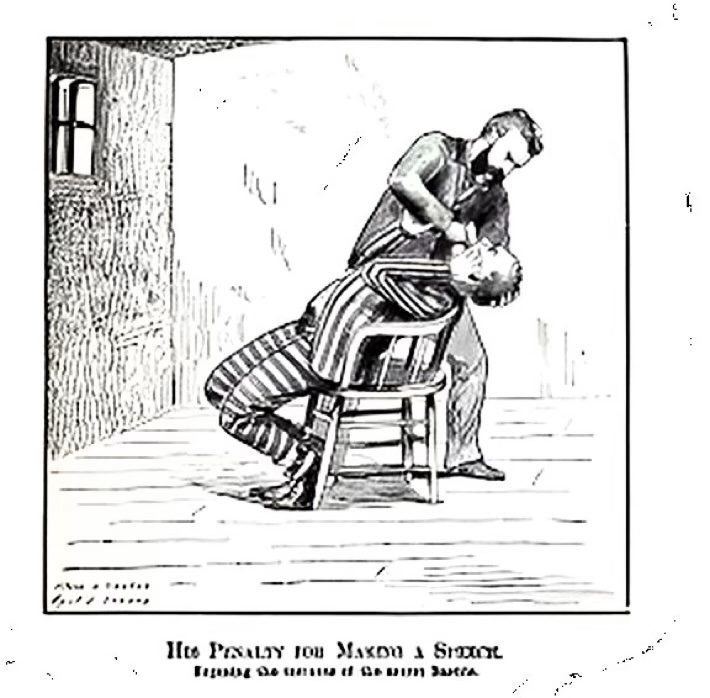
This is the strongest and darkest part of the story. HistoryLink says the Seatco prison was approved in 1877 and opened in 1878 as Washington Territory’s first prison. It was privately operated, and the men behind it profited from prison labor. KNKX, drawing on research from the Washington State History Museum, describes it as a prison where inmates were contracted out for manual labor. For a while there, the prisoners would just walk off the job site … and that led to gangrene-inducing shackles.
The conditions were brutal. The National Register nomination for the Seatco Prison site describes prisoners wearing heavy leg irons for years, suffering wounds from the cuffs, and working under punishing conditions.
That same federal document also preserves one of the most important pieces of Bucoda curse lore: local legend held that J. K. “Jerry” Smith later lost both of his legs because a dying inmate cursed him.
KNKX quotes Washington State History Museum curator Gwen Whiting saying the town changed its name because of the prison’s notorious reputation. It can feel like the town wanted to erase its dark history but it never fully managed to do it.
Later Ghost Stories Kept The Curse Alive
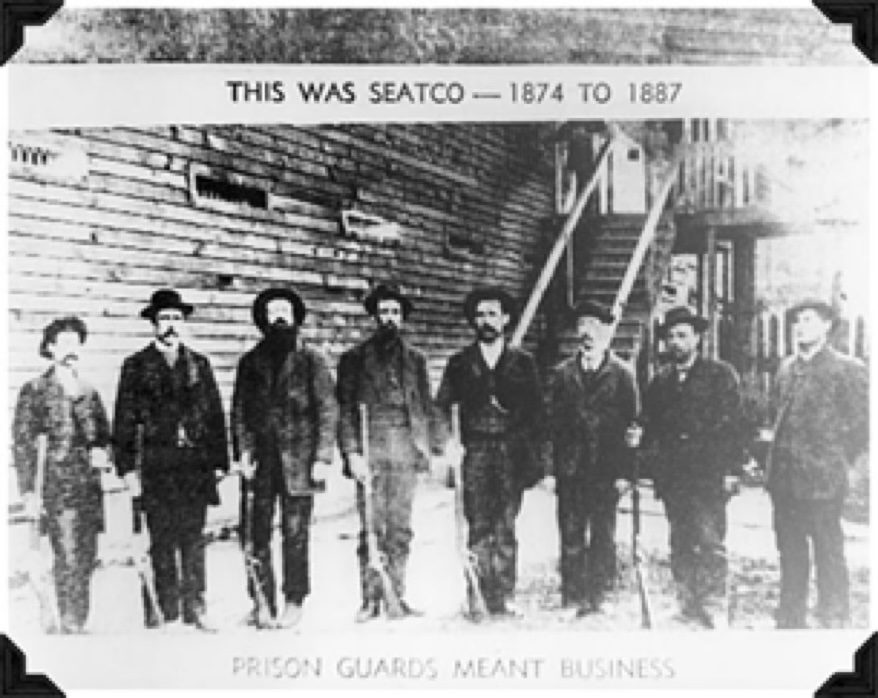
If the prison planted the seed, later ghost stories kept growing it. Experience Olympia’s Bucoda pages repeat local stories including:
- a transparent prisoner appearing in a bedroom window
- screams heard from the gym and prison area at night
- people feeling a tap on the shoulder when nobody is there
Ghost stories like these feed the folklore that keeps the curse alive. It will continue as long as the locals keep telling their stories.
And Bucoda has embraced them. The official Boo-Coda festival page says that by proclamation of the Town Council, Bucoda transforms into BOO-CODA every October. Experience Olympia says the town leans into its haunted history every fall, and that reputation is now part history, part legend, and part community identity. Bucoda is not just a town people say is cursed. It is a town that eventually looked at its dark reputation and turned it on its head.
What The “Curse” Really Feels Like
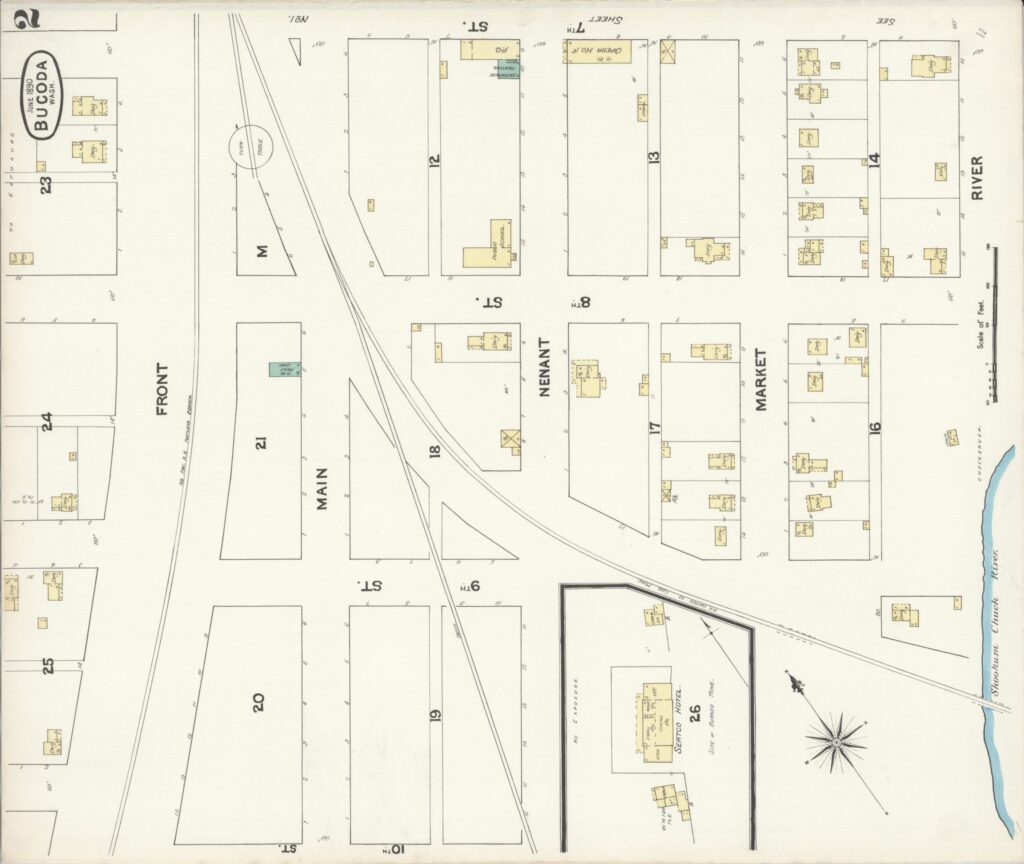
Bucoda may not be cursed in any supernatural sense, but it has the kind of history that makes a curse story feel believable. The prison gave the town a dark beginning. The old Seatco name translated to ghost or devil. Then the fires came. The floods kept coming. The train wrecks added another tragedy. You can see why the reasonable explanation had to be “cursed.”
Disasters That Fed The “Curse”
Fires
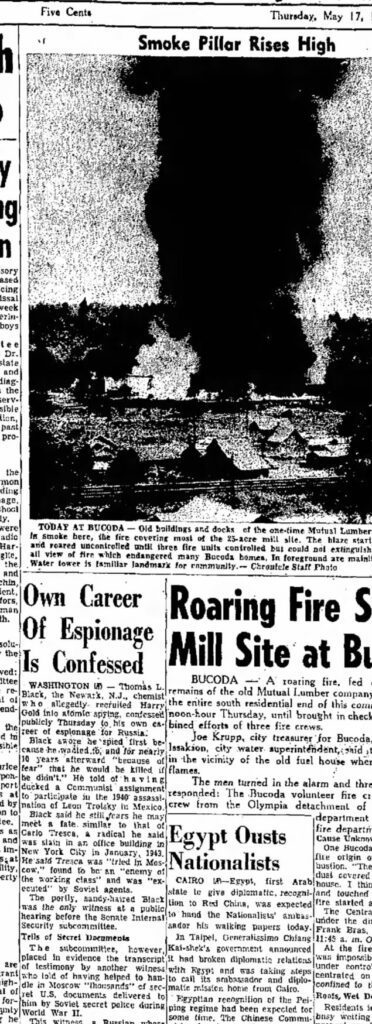
Fire shows up again and again in Bucoda’s history. HistoryLink notes that after an 1890 fire, the Seatco Manufacturing Company rebuilt, only for the town to suffer another downtown fire in 1898.
The old Seatco prison later burned in 1907. The Mutual Mill burned in 1912, reopened in 1919, and a later planing mill site was destroyed by fire again in the mid-1950s.
HistoryLink even sums it up bluntly by saying periodic fires razed many of Bucoda’s original buildings. That kind of repetition certainly makes locals think about a possible curse.
Floods
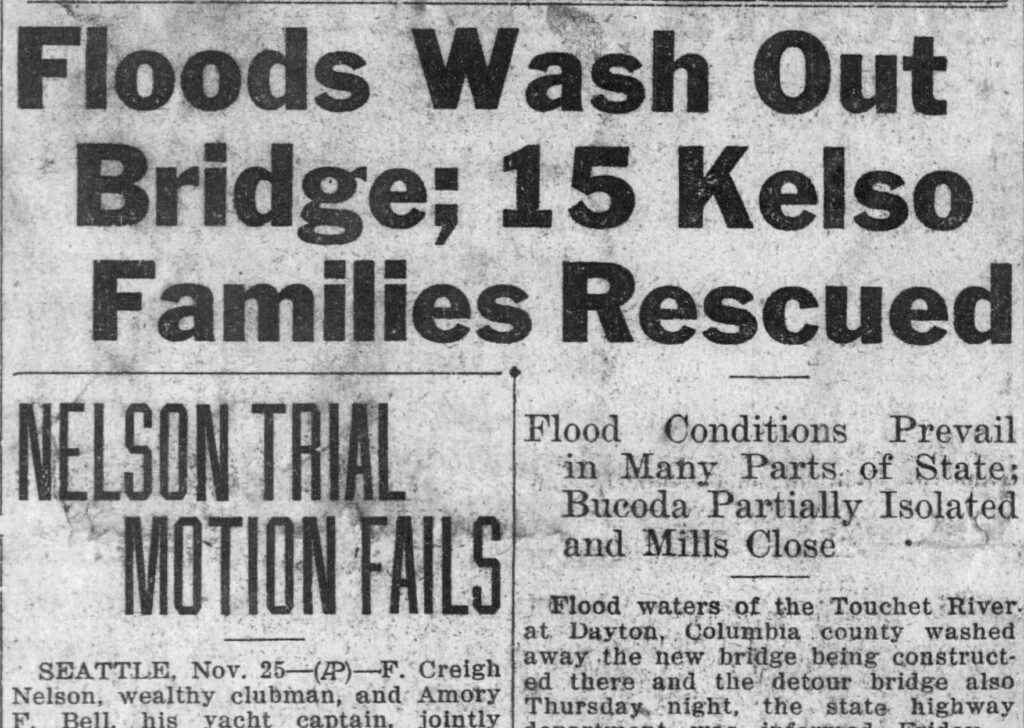
Flooding is another big reason Bucoda feels marked by bad luck. The Skookumchuck has a long history of flooding around town, and the hazard planning documents for Thurston County show just how vulnerable Bucoda is.
The county says flood warning begins near 211.65 feet at the Bucoda gauge, with moderate flooding threatening residences at about 213.65 feet and major flooding at about 215.15 feet. A regional hazards plan says that at 15 feet the river floods several residential and business areas around Bucoda, and at 17 feet it causes major flooding with deep, swift water.
That same plan lists major Skookumchuck flooding around Bucoda in 1990, 1996, and 2009, and identifies 1996 as the flood of record in that dataset.
Train wrecks
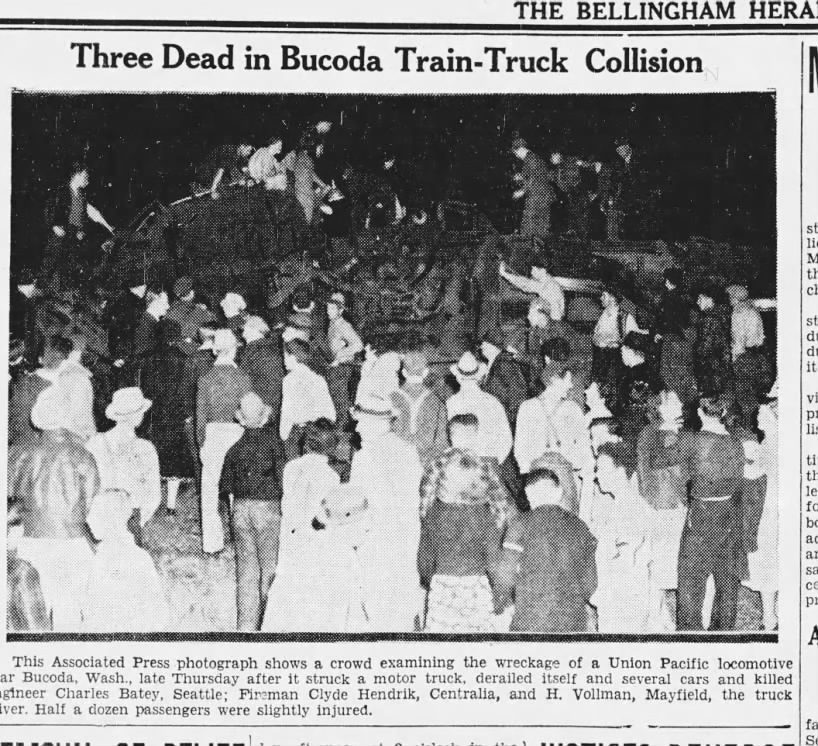
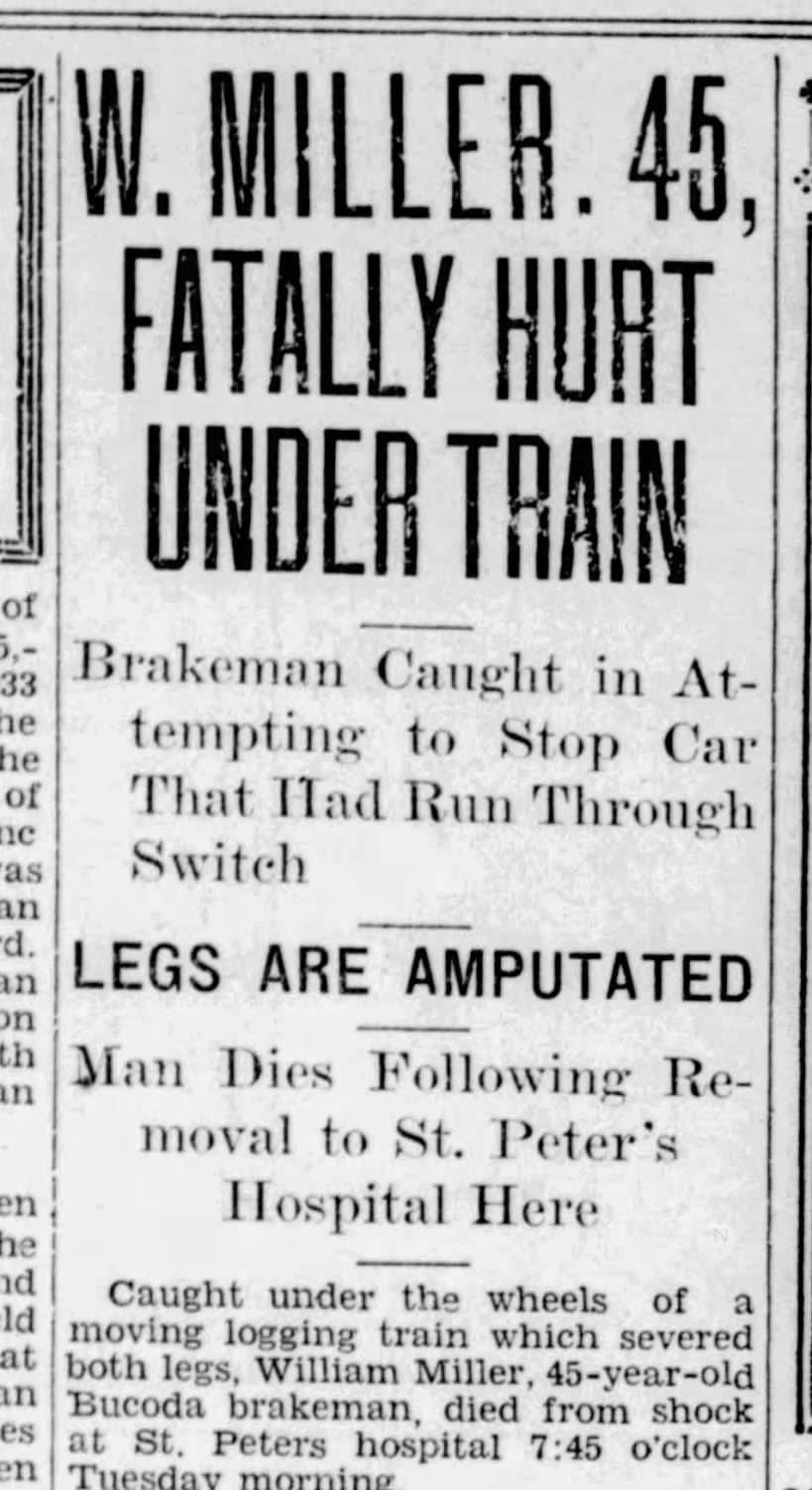
Then there is a tragedy. Bucoda was built around timber and rail, and that brought danger with it. A Lewis County Historical Museum record documents a Union Pacific train colliding with a log truck on April 27, 1939. In October 1935, another train crashed when a trestle gave way and fell into a ravine. A reproduced Thurston County Independent account says eleven men jumped as the bridge gave way, with four suffering serious injuries and the locomotive landing on its side below. While no one died, an urban legend sprouted about a headless engineer walking near the crash site.
Documenting Ghosts & Legends In Bucoda
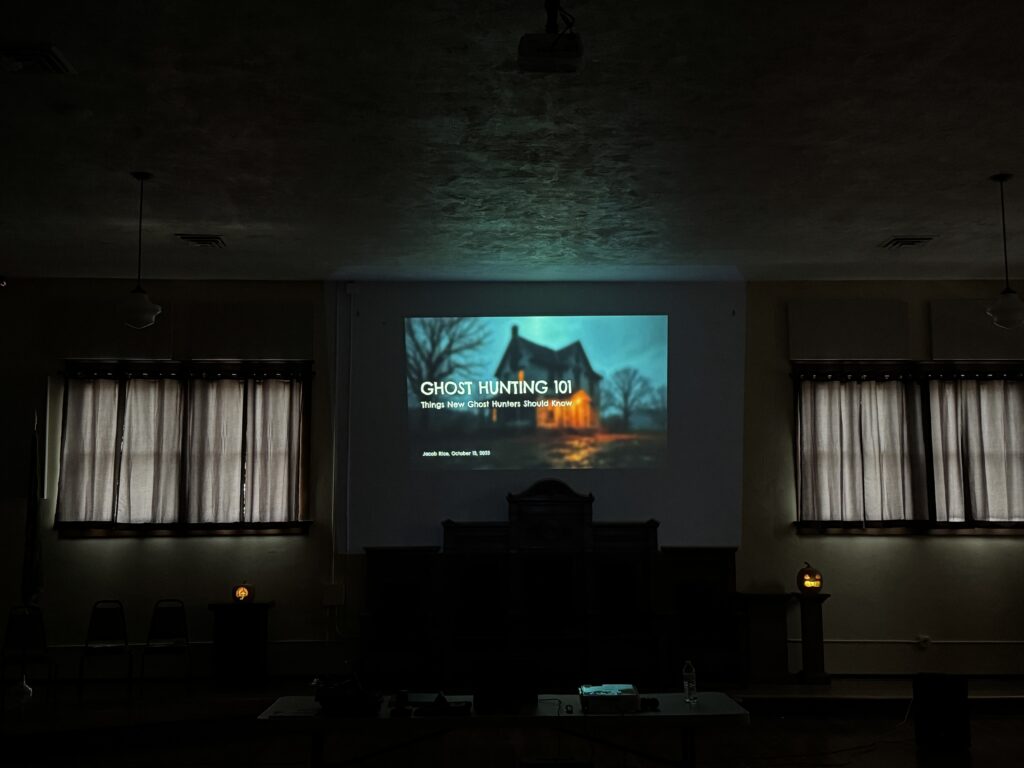
Back in October 2025, I got invited to give a class on ghost hunting for beginners. That was good enough, but the class was in the Odd Fellows Lodge on the top floor of the community center/city hall building. For one thing, this is a historic building AND I got into a Odd Fellows Lodge. That never happens!
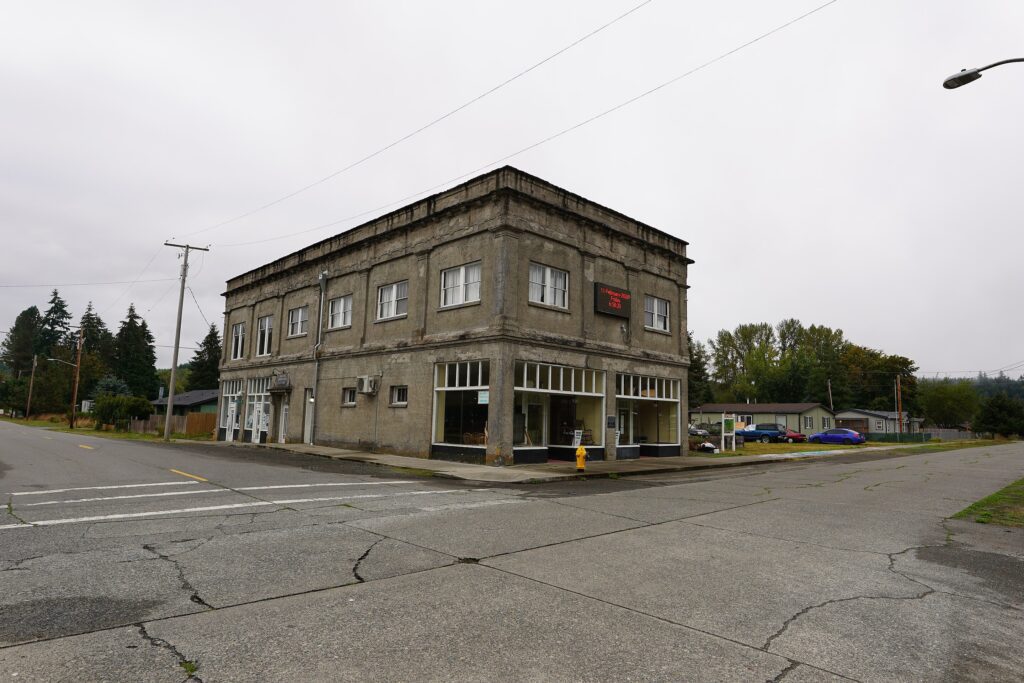
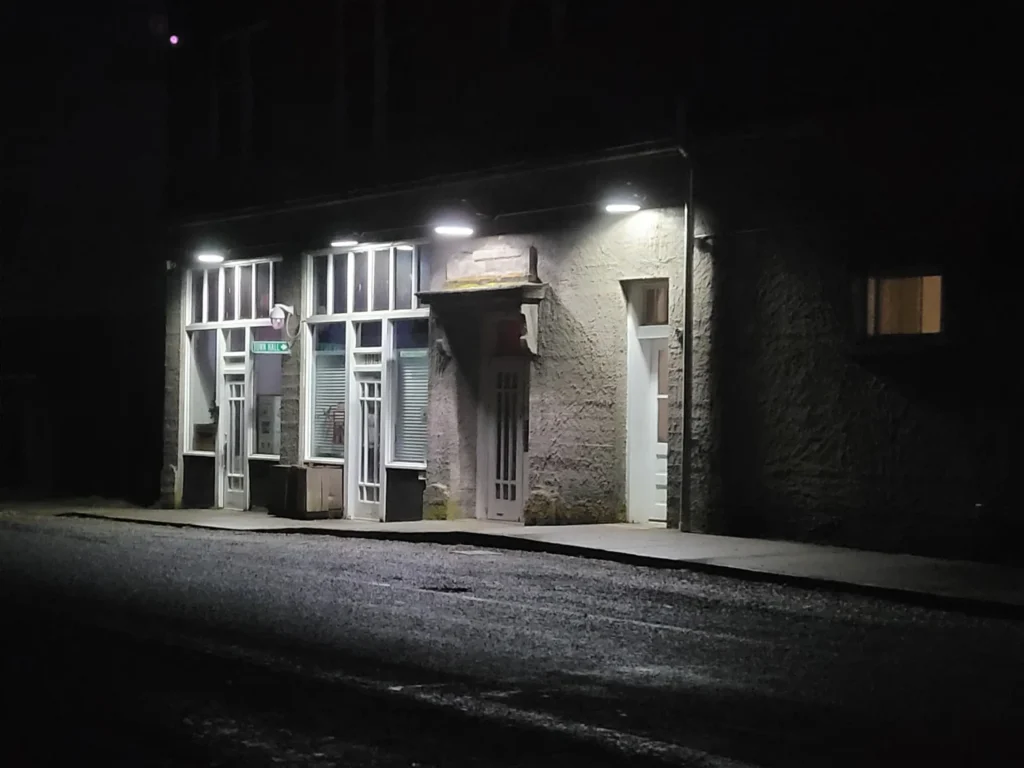
The Odd Fellows Lodge takes up the second floor of the community center.
Needless to say, I started plotting a ghost hunt later in the month, which would include haunted history as well as a ghost hunt.
Speaking of which …
Ghosts In The Odd Fellows Lodge
So, about that ghost hunt …
It was a spooktacular event with about 12 guests. The Ghostly Club presented a 30-minute haunted history backgrounder to get folks ready to investigate. Then, the guests separated into 2 groups of 6 or so. Half stayed in the lodge and the others went across the hall into the kitchen area.
For the first half of the night, I was in the kitchen with a family. I placed ghost hunting gadgets around the room. After 15 minutes, they started to go off in a specific pattern … and that pattern meant coming up to a kid (about 10-years old).
A REM pod would squeal in the kitchen 20 feet away from him. The Dead Bell would ring on a counter top 10 feet away. Then a MEL Meter with REM would pop off right in front of him. And then the Onvoy would beep (touch setting) on the table directly behind him.
It repeated 5 times over the 45-minute investigation. And that made me think something wanted the kid to follow it.
Afterward, the two groups switched rooms, and the boy went into the lodge.
But the second group to come to the kitchen got the highlight of the evening …
On the floor near a door to the lodge, 4 cat balls sat on the ground. And at 10:21 PM when we joked about a ghost cat, the balls went off (see video)!
And at the same time in the lodge (and with the kid’s group), the REM pod on the other side went off! Something walked through that hallway and set off our gadgets. We called it a ghost cat.
I got heart palpitations, and it made the ghost hunt.
DEBUNK: No, there are no bodies in the walls of the lodge. That’s a complete urban legend.
Examining The Devil’s Tree In Bucoda Volunteer Park
The first legend we investigated dealt with the spirits said to haunt the Devil’s Tree and one tree cut down nearby. In the legends, spirits, maybe the Stick People, crawl out and try to lure kids to the trees. Sometimes, they just play pranks. In other cases, they’ll snatch the kids and take them into their realm.
And that probably led to the legend about the time slip story Amy and I discussed in the video. In that tale, a 10-to-12 year-old boy goes through the portal and disappears for 12 hours. He then comes through the opening as if no time has passed.
So, we had to try it. I have to admit I was a bit nervous: My heart started to race and my skin got clammier as I approached. The tree had to be more than 100-feet tall with bright green moss along its split trunk. Inside the “portal,” you could see black, brittle scorch marks covering the inside. I was surprised the tree could still stand. And I wondered if lightning struck it, or someone tried to burn it down …
Needless to say, when we “old people” walked through ….
Nothing happened. Other than bugs falling on us. Maybe we’re outside the spirits’ preferred age demographic?
Anyway, more spooky adventures ensued at a peaceful cemetery just down the road.
Investigating The Seatco Prison Mass Grave
After visiting the Devil’s Tree, Amy and I went to Forest Grove Cemetery in Tenino, a five-minute drive from the park. It’s a quiet resting place with a groomed lawn, headstones that date back to the 1860s, and a mass grave.
There’s a placard for the Seatco prison dead: Those folks buried without a name to mark their location. On the sign, we saw about a dozen names but the mass grave holds dozens of bodies. It’s really a paupers grave, a mix of prisoners and poor. They all rest, side-by-side, without any other indication of their lives.
Amy and I tried to communicate with them. Perhaps their spirits remained and wanted to talk to us? Maybe had a final message for someone close to them?
To do that, Amy used the Hex Box, a spirit box that works more like a ghost portal, while I held a K2 EMF meter. And as Amy read the names of those buried below us …
We got a hit.
It was for Susan, an Irish woman who committed suicide. The K2 meter flared when Amy called her name. Just a few flickers, glowing green-to-yellow. But it was a sign.
No words or ghost voices broke through the static of the Hex Box. But it was a sign. And when we started to leave …
Another flare. Actually multiple flares raced across the K2’s indicators.
It seems the spirits didn’t want us to leave, and we’ll return to chat with them again in the spring.
Bibliography
Alicea, Simone, and Paula Wissel. “Hell on Earth: A Forgotten Prison That Predates McNeil Island.” KNKX Public Radio, 22 Jan. 2019. Accessed 18 Mar. 2026.
“Boo-Coda Spook-tacular Halloween Festival.” Town of Bucoda, 29 Sept. 2025. Accessed 18 Mar. 2026.
“Bucoda, WA.” Experience Olympia & Beyond. Accessed 18 Mar. 2026.
“Chapter 4.3 Flood Hazard.” Thurston Region Hazards Mitigation Plan, Mar. 2017. Accessed 18 Mar. 2026.
“Corrections Department, Penitentiary, Convict Record, 1877–1888.” Washington State Archives, Digital Archives. Accessed 18 Mar. 2026.
“5 Spoooooky Facts About Boo-coda.” Experience Olympia & Beyond. Accessed 18 Mar. 2026.
“Skookumchuck River.” Thurston County. Accessed 18 Mar. 2026.
“Skookumchuck River near Bucoda.” National Water Prediction Service, National Oceanic and Atmospheric Administration. Accessed 18 Mar. 2026.
Stevenson, Shanna. “Bucoda Incorporates on July 5, 1910.” HistoryLink.org, 2 Sept. 2025. Accessed 18 Mar. 2026.
“Today in History: Fire Wipes Out Bucoda Industry in 1890.” The Chronicle, 16 June 2010. Accessed 18 Mar. 2026.
Thurston County Historic Commission. “Seatco Prison Site.” Thurston County Historic Markers. Accessed 18 Mar. 2026.
United States, Department of the Interior, National Park Service. Seatco Prison Site. National Register of Historic Places Inventory – Nomination Form, 2 May 1975. Accessed 18 Mar. 2026.
United States, Interstate Commerce Commission. Report of the Accident Investigation Occurring on the Northern Pacific Railway, Bucoda, WA. 27 Apr. 1939. ROSA P, U.S. Department of Transportation. Accessed 18 Mar. 2026.
Have you had any spooky experiences in Bucoda? If so, let me know in the comments below.
Thanks for reading Ghostly Activities. Much appreciated and take care!
Discover more from GHOSTLY ACTIVITIES
Subscribe to get the latest posts sent to your email.