Haunted Case File: The Tokeland Hotel In Tokeland, Washington

Location: Tokeland, Washington
Established: Farmhouse built in 1885; opened to travelers as the Kindred Inn in 1899
Case Type: Historic hotel haunting, apparitions, phantom sounds, ghost animal, place-lore
Reported Hotspots: Room 7, Room 4, second-floor hallway, fireplace room, third-floor storage area
Primary Legends: Charley, Albert Brown, the ghost cat, Room 7
Case Status: Pre-investigation research
The Tokeland Hotel has more going for it than a few spooky hotel stories. There are decades of guest reports, real family tragedies tied to the property, an old cemetery story, and one haunted room whose legend may have changed considerably over time.
Case Summary

The Tokeland Hotel sits near Willapa Bay on Washington’s southwest coast. The current hotel calls itself Washington’s oldest hotel. Its National Register nomination is slightly more cautious, describing it as one of the state’s oldest resort hotels.
The building started as the home of Elizabeth “Lizzie” Brown Kindred and William Kindred in 1885. The Kindreds expanded the farmhouse in 1899 and formally opened it to travelers as the Kindred Inn. Another large wing followed in 1910. The hotel was added to the National Register of Historic Places in 1978.
The paranormal reputation came later, but it isn’t entirely a modern internet creation. In 2019, hotel general manager Nic Krause showed historian Feliks Banel a logbook containing roughly 50 to 60 reports of strange experiences collected over several decades. Krause said two subjects appeared repeatedly through those accounts: Charley and Room 7.
That’s what makes Tokeland interesting to me. We aren’t dealing with one ghost story copied across a dozen haunted-place websites. There appears to be a continuing body of personal experience narratives connected to the same building.
Documented History

George and Charlotte Brown settled at Toke Point in 1858. Their daughter Lizzie later married William Kindred. William purchased the family homestead in 1884, and the couple built the farmhouse that became part of today’s hotel the following year.
The 1978 National Register nomination describes the original building as a two-story wood-frame farmhouse with a brick fireplace built into its north wall. A two-story addition went up in 1899 when the Kindreds formally opened their home to travelers. Another wing and a second large fireplace were added around 1910.
The hotel continued growing as Tokeland became a coastal resort. Guests arrived for the seafood, bay, golf, hunting and a considerably quieter vacation than they might have found in the nearby lumber towns.
Today, the hotel has 17 guest rooms on the second floor. The old building still has thin walls, shared bathrooms and plenty of creaking during coastal storms. That’s important later, because a 140-year-old wooden hotel also comes with a built-in paranormal debunking department.
Haunting Claims at a Glance
| Claim | What We Know | Case Rating |
|---|---|---|
| Room 7 is haunted | Appears repeatedly in a decades-old hotel occurrence log and guest reports. | Strong ghostlore tradition |
| Someone was murdered in Room 7 | No victim, date or historical record located. Hotel management said in 2019 that no tragic backstory was known. | Unverified / likely later legend |
| Charley died behind the fireplace | Longstanding hotel tradition, but no historical record confirming Charley has been found. | Established folklore |
| Albert Brown drowned | His drowning in 1866 appears in a 1930 history of Pacific County. | Documented history |
| Albert haunts the hotel | Later paranormal tradition identifies a child spirit as Albert. | Ghostlore |
| A ghost cat walks across beds | Repeated personal-experience reports, including one witness who described experiencing it during several stays. | Recurring experience tradition |
| The third floor is active | Visitors report footsteps, movement and other sounds from an area historically used for storage. | Reported activity |
Charley: The Ghost Behind the Fireplace

Charley is the hotel’s signature ghost.
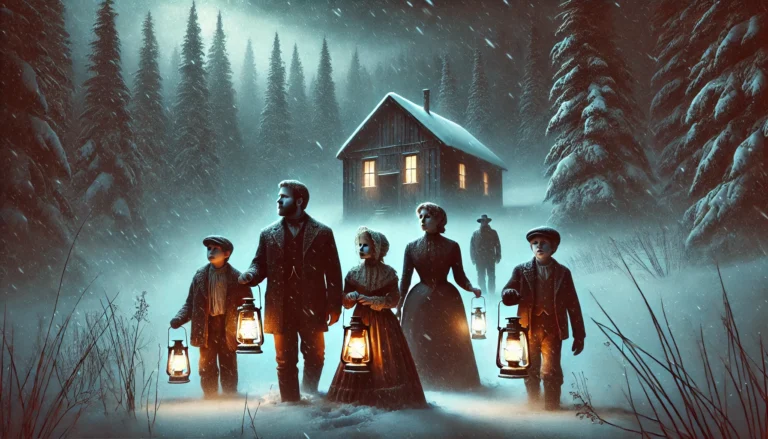
The usual story describes him as a Chinese immigrant living around Tokeland near the turn of the 20th century. According to hotel tradition, Charley had escaped people who controlled his labor. The Kindreds supposedly hid him in a small space near or behind a fireplace when those people came looking for him.
Then somebody lit the fire.
Charley reportedly died while hiding there, possibly from smoke or carbon monoxide. His spirit is now blamed for footsteps, strange feelings, apparitions and objects moving around the hotel.
That’s the legend.
The historical record isn’t nearly as cooperative.
I haven’t found a census entry, death record, newspaper story or other contemporary document confirming a Chinese man named Charley died inside the hotel. Krause himself described the story in 2019 as something that had been “pieced together through different accounts.”
There is one intriguing historical connection, though.
A University of Washington index of Chinese and Japanese subjects in the Seattle Post-Intelligencer lists an article from July 22, 1892 titled “Exciting Chase of Smugglers.” According to the index, sixteen Chinese people and a white guide escaped officers on Willapa Bay near South Bend.
That doesn’t prove Charley’s story.
It does show that Chinese smuggling through the Willapa Bay area during the Chinese Exclusion era wasn’t invented by a paranormal website. The legend developed inside a real historical setting.
There’s another detail worth checking in the field. The National Register documentation says the original 1885 farmhouse had one brick fireplace. A second large fireplace was added around 1910.
Field question: Which fireplace is traditionally identified with Charley?
If the story consistently points to one fireplace, its construction date could help narrow down when the alleged event was supposed to have happened.
Albert Brown: History Before Haunting

Albert Brown gives us something much firmer to work with.
He was Lizzie Kindred’s brother and lived at Toke Point before the hotel existed.
A 1930 history titled Our Pacific County identifies George H. Brown as an early Tokeland settler and states simply that his son Albert Brown drowned in 1866.
That’s documented history.
The more dramatic version came later. Hotel tradition says Albert became trapped in the mud around the bay and drowned when the incoming tide covered him. The 2019 account from hotel management repeats that version.
It’s plausible, but I haven’t found a contemporary 1866 source describing exactly how the drowning happened.
There’s also an important problem with calling Albert a “hotel ghost.”
Albert died in 1866.
The farmhouse that became the hotel wasn’t built until 1885.
Albert never lived there.
If people really do report a child spirit associated with him, his connection would be to the Brown family and the surrounding land rather than memories formed inside the hotel.
That’s a subtle distinction, but it’s an important one.
The Lost Cemetery

The cemetery story may connect Albert back to the property.
In 2019, Krause said a small cemetery once stood on hotel property. According to the account, a major storm during the 1970s damaged or washed away the burial ground. Duck hunters later recovered three grave markers.
Two were associated with members of the family: Albert Brown and Leonidas Norris. The third was reportedly a simple marker bearing the initials CLL.
Later sources commonly call the burial ground Cedar River Cemetery. I haven’t found an early cemetery register, plat or other primary document confirming that formal name, so I’m keeping that part of the story provisional.
The CLL marker gets even more speculative.
Someone eventually suggested it could be Charley’s grave.
Maybe.
But we don’t know Charley’s surname. We don’t know who CLL was. And we don’t have evidence connecting Charley to that cemetery.
For now, the marker is an unidentified artifact that became attached to the Charley legend.
That’s actually pretty normal folklore behavior. Give people a mysterious grave marker and a ghost without a surname, and sooner or later somebody is going to introduce them.
The Ghost Cat

Tokeland’s ghost cat may be my favorite story because nobody seems to need an elaborate origin for it.
Guests describe feeling something jump onto the bed, walk around their feet or settle onto the mattress when no cat is there.
Historian Elisa Law told Banel that she’d stayed at the hotel about half a dozen times and repeatedly felt what seemed like a cat jump onto the foot of her bed and move around her feet.
That’s a personal-experience narrative, not proof of a supernatural animal.
But repeated experiences with the same basic pattern are worth documenting.
I also like that the tradition doesn’t seem to need a named victim, tragic death or cursed object. Apparently sometimes a ghost cat can just be a ghost cat.
Room 7

If Tokeland Hotel has one main paranormal hotspot, it’s Room 7.
The strongest source isn’t a haunted-hotel website. It’s that old occurrence log.
Krause said Room 7 and Charley were the two themes that kept appearing throughout roughly 30 to 40 years of guest reports. Room 7 was also the room most commonly associated with unusual experiences during his time managing the hotel.
Reports associated with Room 7 include shadow figures, knocking, disturbed sleep, feelings of being watched and figures around or near the bed.
Older material also identifies Room 4 as another haunted room, although I haven’t found the same depth of recurring reports for Room 4 that exists for Room 7.
The hotel’s current website no longer names particular haunted rooms. Its FAQ simply asks whether Tokeland is haunted and answers that visitors can decide for themselves, adding that whatever ghosts might be there seem playful and friendly.
Was Someone Murdered in Room 7?

This is where the case gets really interesting.
A number of paranormal websites now state that someone was murdered in Room 7.
I can’t find the murder.
No victim. No date. No suspect. No newspaper article. No historical account.
More importantly, when Krause discussed Room 7 in 2019, he specifically said there was no known historical tragedy explaining why the room had its reputation.
That statement came from someone who had access to the hotel’s decades-old occurrence log.
The online trail tells a different story.
A Washington Haunted Houses listing last edited in 2016 says only that it had been said a “long forgotten murder” happened in Room 7. It gives no source, victim or date.
Later websites become more confident. One says a murder “may” have happened there. Another eventually states outright that Room 7 was the site of a murder early in the hotel’s history.
The evidence didn’t get stronger.
The wording did.
My working theory is that the haunting came first and the murder story came later to explain it.
That makes Room 7 a neat example of legend development. People report strange experiences in a particular room. The room earns a reputation. Eventually, somebody asks the obvious question:
Why is it haunted?
And folklore supplies an answer.
Case assessment: Treat the Room 7 murder as unverified folklore unless historical evidence surfaces.
The Third Floor

Another interesting area isn’t available as guest accommodation.
During a 2017 visit, a writer toured the hotel’s third floor with then-owner Katherine White and described it as storage space containing donated furniture. The writer also reported seeing a light flickering unexpectedly near the staircase during the tour.
Other accounts describe footsteps or noises resembling coat hangers sliding around above the occupied second floor.
That makes the third floor worth documenting, but it also gives us plenty of ordinary possibilities to consider: stored objects shifting, plumbing, expansion and contraction of wood, rodents, wind and sound traveling through an old structure.
Environmental Problems With Investigating Tokeland

This hotel could produce false positives for fun.
The current owners openly warn that sound travels through the old building and that the structure can creak and move during coastal storms. Guest bathrooms are shared, which means people may be walking through hallways throughout the night.
That matters for knocks, footsteps and voices.
I’d also watch for:
- Wind moving or stressing the structure.
- Plumbing and water movement.
- Guests moving through hallways to shared bathrooms.
- Staff activity downstairs.
- Animals inside or around the building.
- Traffic and outdoor noise carrying across the property.
- Temperature changes near windows, fireplaces and exterior walls.
- Vibration transferring through old wooden floors.
None of that disproves anybody’s experience.
It just gives us something to test before blaming Charley every time the building makes a noise.
What I Want to Find Out

My investigation would focus less on trying to “prove ghosts” and more on testing several specific traditions.
- Room 7: Does unusual activity occur there under controlled observation, and what environmental factors could reproduce previous reports?
- Charley: How old is the Charley tradition, which fireplace belongs to the story, and do early entries in the hotel logbook mention him?
- Albert Brown: Can his grave marker clarify his age and dates, and when did people first start identifying a child spirit as Albert?
- The cemetery: Can its original location and name be documented?
- The ghost cat: Are reports tied to particular rooms or beds, or are they scattered throughout the second floor?
- Third floor: Where exactly are footsteps and scraping sounds reported, and what is physically stored above those rooms?
- Room 7 murder: Can anyone at the hotel identify where that story originated?
Best Potential Evidence

The most valuable object at Tokeland may not be a REM pod, recorder or thermal camera.
It may be the hotel’s old paranormal logbook.
If access is allowed, I want to document the earliest references to Room 7 and Charley and see how the wording changes over time.
An early entry simply describing knocks or a shadow in Room 7 would tell us one thing.
An entry from decades later suddenly mentioning a murder would tell us something completely different.
That would let us document not just a haunting claim, but the development of the legend itself.
Pre-Investigation Assessment

Tokeland Hotel has several layers of ghostlore, but they shouldn’t be treated equally.
Albert Brown’s drowning is historical.
Charley is a longstanding local tradition that fits a real historical period, but I haven’t verified that he existed.
The ghost cat is a recurring personal-experience tradition.
Room 7 has one of the strongest paranormal reputations in the building, backed by decades of guest reports.
The Room 7 murder is currently unsupported.
That last point doesn’t make the case less interesting.
I think it makes it better.
Tokeland gives us a chance to look at how haunted places actually develop. History creates the setting. People have strange experiences. Stories get repeated. Names attach themselves to apparitions. Eventually, explanations emerge for mysteries nobody could originally explain.
Some of those explanations may be true.
Some may be folklore doing what folklore does.
That’s what I want to find out. And the Ghostly Club will check out the haunted claims soon.
Sources & Further Reading
Banel, Feliks. “Ghost Cat, Tombstones, and Other Reasons to Visit Tokeland Hotel.” MyNorthwest, 23 Oct. 2019.
National Park Service. “Tokeland Hotel.” National Register of Historic Places Inventory — Nomination Form, 1978.
Tokeland Hotel. “History.” Official Tokeland Hotel website.
Tokeland Hotel. “Hotel Rooms.” Official Tokeland Hotel website.
Tokeland Hotel. “Frequently Asked Questions.” Official Tokeland Hotel website.
University of Washington Libraries. Chinese and Japanese in the Seattle Post-Intelligencer, 1892.
Williams, L. R. Our Pacific County. 1930.
“The Haunted Historic Tokeland Hotel.” Life Other Than, 6 Jan. 2017.
Washington Haunted Houses. “Tokeland Hotel.” Listing last edited 15 June 2016. Used here specifically to trace the development of the Room 7 murder legend.
Note: Supernatural claims in this case file represent folklore, witness reports and personal experiences. They are not presented as established evidence of ghosts.
Have you had a ghostly experience at the Tokeland Hotel? Is so, tell me about it in the comments below. Thanks for reading this haunted case file. Much appreciated and take care!