

How to Make a Yule Log Charm to Ward Off Winter’s Bad Spirits

Hi gang! I wanted to share a practice I use to keep the bad vibes away during Bleak Season and Creepmas. It focuses on Yule logs, and it’s been around for centuries. After all, I wouldn’t be much of a paranormal guide if I didn’t share some tips with you, eh? Let’s get started …
A Cozy, Protective Tradition
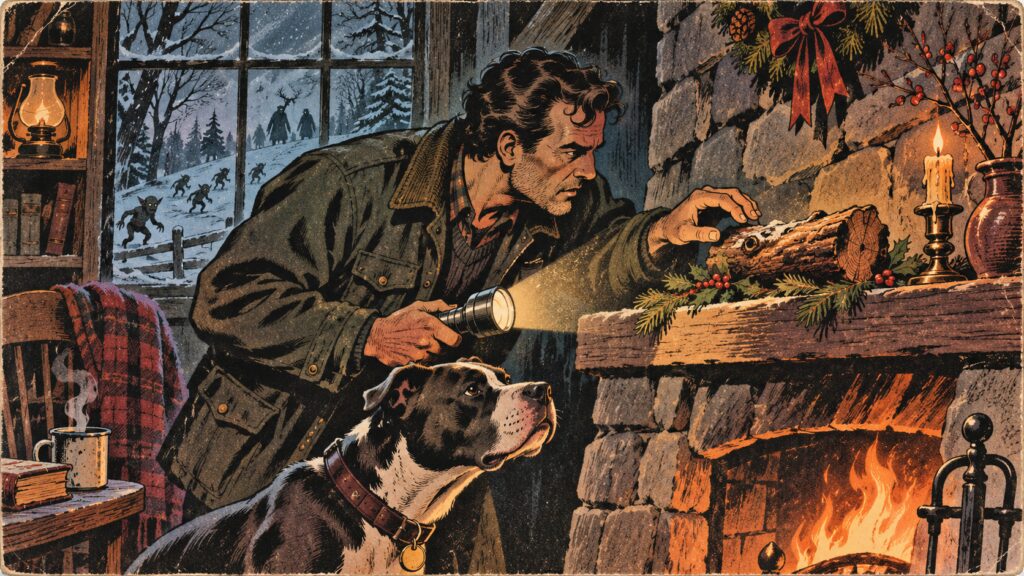
There’s something deeply comforting about a fire in the dead of winter. It gives a room a warm, steady center while the dark presses up against the windows.
That instinct to push back the gloom is likely why the Yule log gathered so much protective folklore over the centuries. Across parts of Europe, families hauled a massive log indoors at Christmas, burned it in the hearth, and stashed a charred piece away until the following year. While the exact customs varied from village to village, that hunk of wood was widely treated as a household guard, a magnet for good luck and a shield against winter misfortune.
For Bleak Season, I love the idea of borrowing that old tradition to make a small seasonal ward for the home. Not because a scrap of timber is going to physically tackle every ghost, goblin, or bad decision that wanders up your walkway. This is folklore, after all. But it gives us a great excuse to craft a cozy winter charm and keep the old stories alive.
A Little Bit of Yule Log Lore
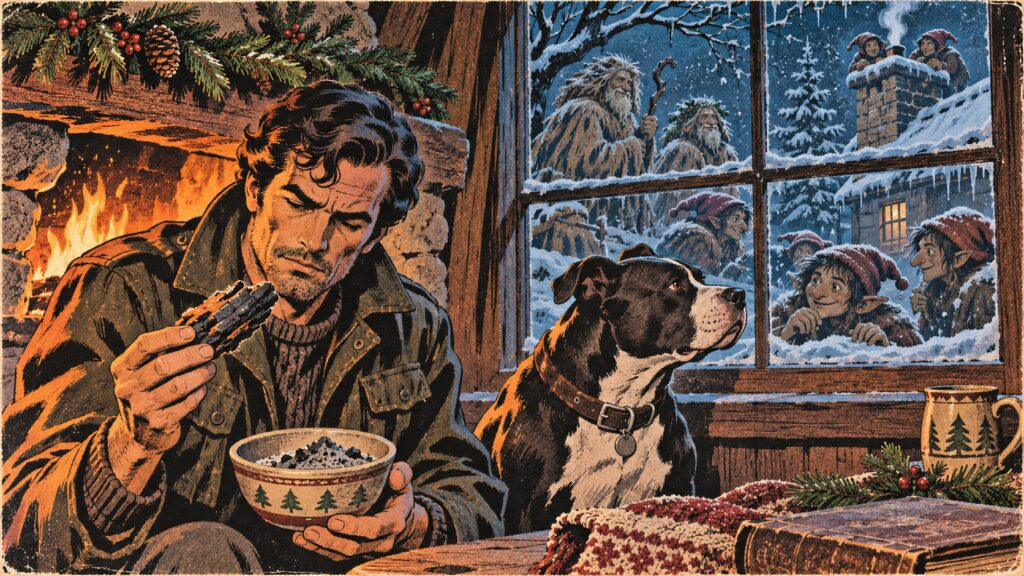
Back in the day, you didn’t just toss a Yule log on the fire and call it a night. In many British traditions, the log was meant to smolder all the way through the holidays. Families saved an unburned stub to light the next year’s fire, carrying the household’s luck forward in an unbroken chain. In Yorkshire, folks even made a ritual of sitting silently on the “Yule clog” to make secret wishes before it hit the flames.
Elsewhere, the leftovers did the heavy lifting. Folklore collectors documented widespread beliefs that Yule-log remnants could shield a house from lightning, house fires, witches, and stray hexes. Farmers even scattered the ashes over their fields or mixed them into livestock feed to ward off blight. Of course, these were hyper-local customs rather than one universal rulebook.
There’s even a direct line to holiday monsters. In Greek folklore, burning a log through the festive season was a practical defense against the Kallikantzaroi—subterranean goblins said to surface during the twelve days of Christmas to wreak havoc on homes. That specific goblin-repelling duty belongs to regional Mediterranean lore, though it fits right into the broader winter mood.
You’ll often hear the Yule log billed as an ancient, unbroken pagan solstice rite. While that makes for a great story, historians point out that the hard evidence just isn’t there. Later medieval and early modern Christmas customs—when a giant log was simply the ultimate symbol of midwinter abundance—are much better documented than any direct link to pre-Christian rituals.
Make Your Own Creepmas Hearth Charm

If you want to bring a little of that old-world protective energy into your space, here is an easy, apartment-friendly version. Think of it as a seasonal craft and a way to set an intention for your home, rather than a lab-tested supernatural forcefield.
What you’ll need:
- A small piece of clean firewood, a sturdy cinnamon stick, or a wooden ornament
- A length of ribbon or natural twine
- A small card or scrap of heavy paper
- A candle or a warm LED tea light
How to put it together:
- Write a short intention for the dark months on your card. Keep it simple: Something like, May this home stay warm, safe, and welcoming until the light returns.
- Tie the note to your piece of wood with the twine, or tuck it underneath if you’re using a flat ornament.
- Set it near your fireplace, on a bookshelf, or wherever your home’s “center” happens to be.
- Light your candle (or flip on the LED), take a slow breath, and let the moment kick off your Creepmas season.
Note: If you actually have a wood-burning fireplace and want to burn a real log, stick to standard fire safety. Old folklore already gives the Yule log plenty of supernatural chores: It doesn’t need to start a chimney fire.
What the Charm Means to Me

My favorite part of the Yule log custom is how it links one winter to the next: You save a piece of the old fire to spark the new one. To me, it’s less about building an impenetrable magical barrier and more about tending the warm, ordinary heart of the house when the weather turns hostile.
So I’m borrowing the symbolism, not claiming a piece of pine has superpowers. The folklore is real as folklore. The protection is a story people told, a hope they carried through the cold, and a fun ritual we can adapt for our own living rooms.
And if the Kallikantzaroi show up anyway, at least the place will be cozy.
Sources & Further Reading
Alexandra Medcalf, “A Yule… Clog?,” Borthwick Institute Blog (University of York), Dec. 7, 2017.
Explores regional Yorkshire holiday traditions, including the custom of sitting silently on the Yule log to make wishes before burning it.
Clement A. Miles, Christmas in Ritual and Tradition, Christian and Pagan, T. Fisher Unwin, 1912 (via Project Gutenberg).
A classic early 20th-century survey of European winter customs that documents ash-scattering charms and Greek hearth fires meant to ward off the goblin-like Kallikantzaroi.
The Folklore Society, Archives & Publications on British Seasonal Customs, London.
Offers extensive historical records on British midwinter traditions, particularly the practice of saving a charred fragment of the Yule log to protect the household and spark next year’s fire.
Francis Young, “The Ancient Tradition of Burning a Yule Log,” The Spectator, Dec. 24, 2025.
Examines the historical evidence behind the Yule log and pushes back on the popular myth that it is a direct, unbroken survival of ancient pagan sun worship.
Thanks for reading the Yule log charm post. Do you have any Bleak Season/Creepmas protective practices? If so, let me know about in the comments below. Much appreciated and take care!


