The Sherlock Holmes Ghost Hunting Methodology

Sherlock Holmes is a great model for ghost hunting because he is not really a “debunker” or a “believer” first. He is an observer, a pattern-finder, and a case-builder. That style really fits paranormal investigation extremely well.
For me (and hopefully us ghost hunters), the trick is to borrow Holmes’s method, not his Victorian-era arrogance. Let’s be real: Sherlock had an EGO (big letters to fit the big ego!), and it’s something we’ve seen across the ghost hunting community.
Any, here’s how I’d translate Holmes’ methods into ghost hunting process.
1. Observe before you explain
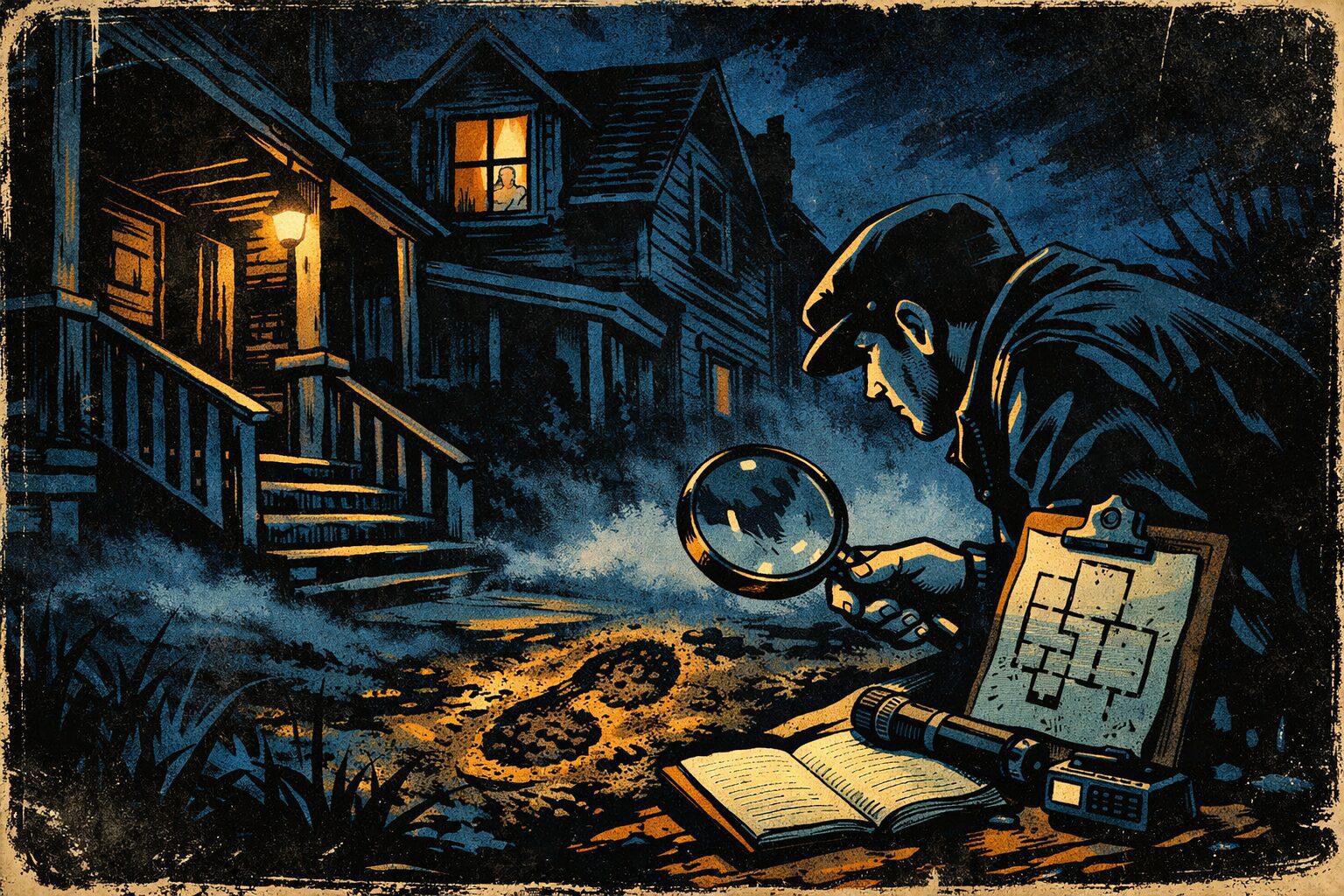
Holmes notices the mud on the boot, the ash on the sleeve, the scratch on the door frame. He does not begin with “it must be a ghost.”
For ghost hunting, that means:
- note the smell before you note its scent
- note the draft before you call it a cold spot
- note the timing of footsteps before you call them phantom phenomena
- note where everyone was standing before you interpret odd creaks
Your first job is to gather tiny physical details.
A haunting often lives in the small stuff … a lot of subtle sensory details.
A Holmes-style series of questions would be something like this:
- What exactly happened?
- Where exactly did it happen?
- What else was happening at the same moment?
2. Build from clues, not vibes
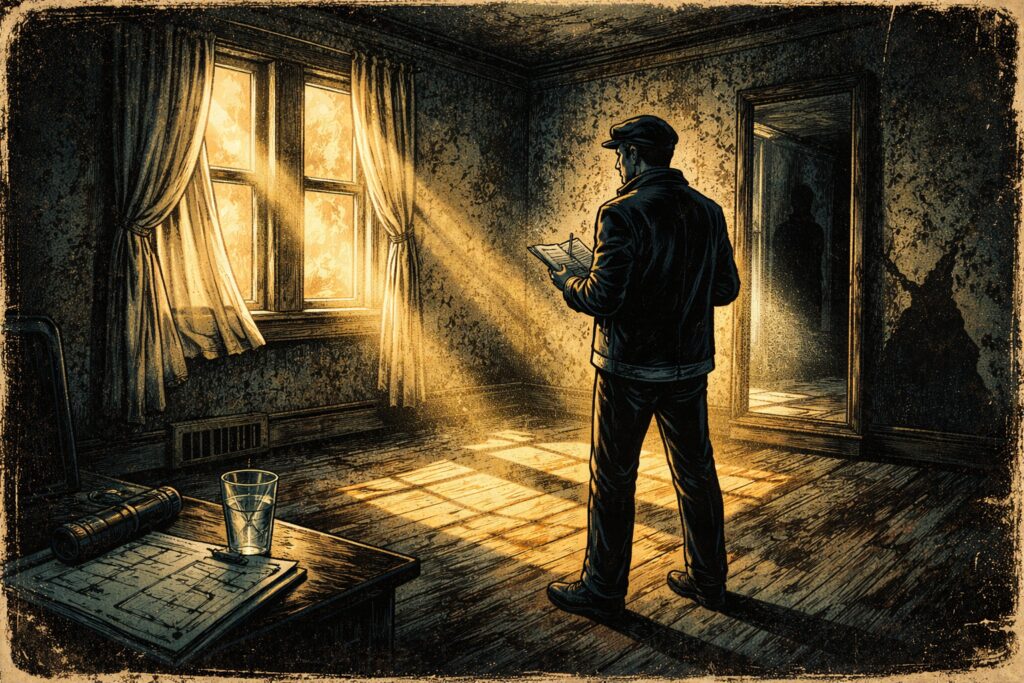
Holmes uses clues to construct a chain of events. A lot of ghost hunters jump from feeling to conclusion.
Instead of:
“The room felt heavy, so there was probably a spirit.”
Try:
“At 10:14 PM the room felt warmer and more pressurized than the hall. At 10:16 a faint floral smell appeared. At 10:17 two people heard tapping from the west wall.”
That is a case note. That gives you something to compare later.
Holmes would want:
- times
- locations
- sequence (what happened in order, from beginning to end)
- witnesses
- conditions
3. Separate fact, inference, and theory
This is the biggest Holmes move of all.
He is constantly distinguishing between:
- What is known
- What is suggested
- What is still unproven
For ghost hunting, make three columns in your notes:
Observed
- three knocks from ceiling
- recorder captured faint voice-like sound
- dog barked at empty doorway
Inference (possible explanations)
- pipe expansion
- distant conversation
- animal scent
Working theories
- recurring intelligent response
- location-based haunting
- environmental trigger
This keeps your reasoning clear and logical. It also makes your work feel much more credible.
4. Eliminate ordinary causes without becoming a jerk about it
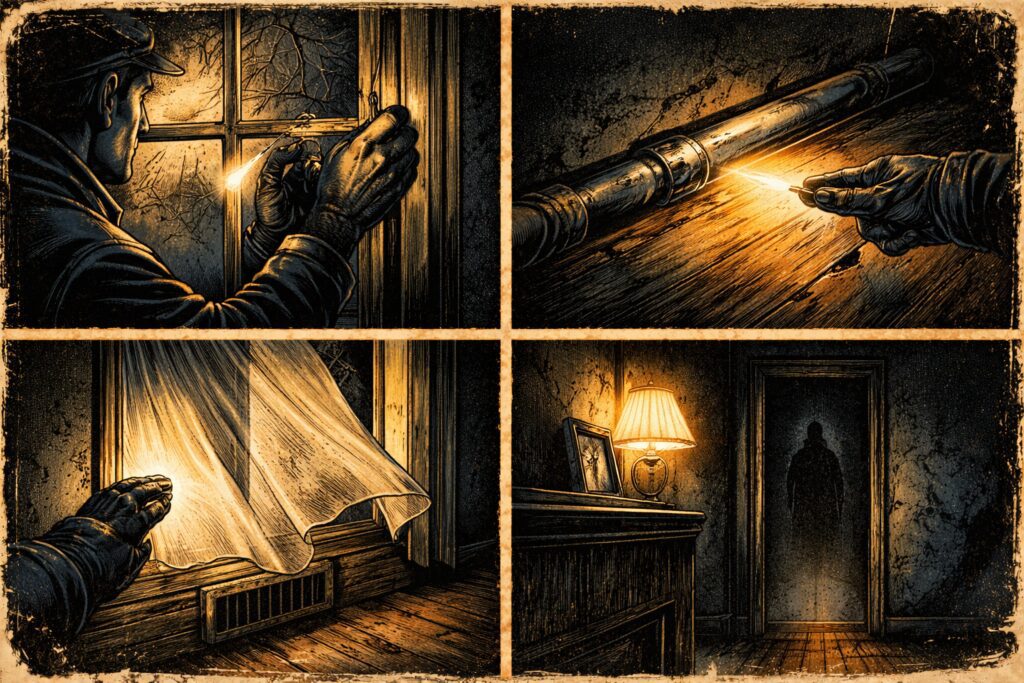
Holmes is famous for ruling things out. That does not mean he kills the mystery. It means he protects the mystery from cloudy thinking.
In ghost hunting, that means checking:
- HVAC
- plumbing
- loose windows
- reflective surfaces
- traffic noise
- neighboring properties
- animal activity
- electromagnetic sources
- building settling
- human suggestion and group influence (which is common in ghost hunting)
The point is not “nothing paranormal exists.”
The point is: don’t let a banging shudder masquerade as a ghost.
Once the obvious is ruled out, what remains becomes more interesting … and something to sleuth more deeply.
5. Treat witnesses like Holmes would, but kinder
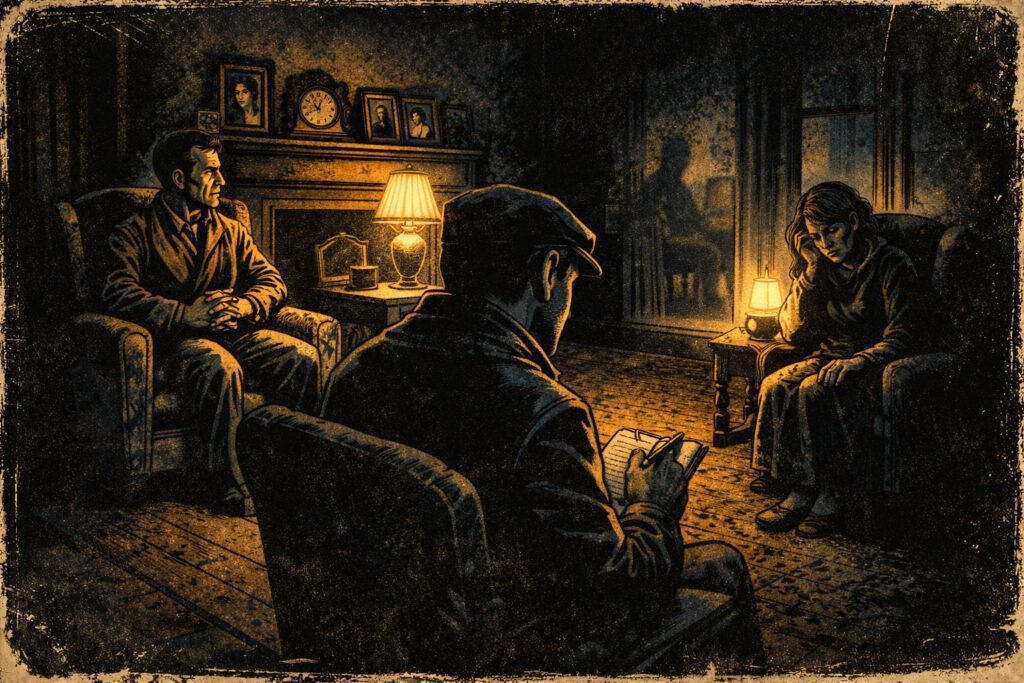
Holmes listens for wording, omissions, contradictions, and repeated details. He cares about what the witness noticed and what they assumed.
So when interviewing a witness, ask:
- What did you notice first?
- What made you think it was unusual?
- What did it sound like exactly?
- Where were you standing?
- What did you do next?
- Who else was present?
- Has this happened before?
Do not ask:
- Did it feel evil? (this injects bias into evidence collection)
- Do you think it was the ghost of the old owner? (more biased assumptions)
- Was it trying to communicate? (a non-ghost hunter wouldn’t know how to answer this)
That feeds a developing narrative way too early. It’s like you’re already writing the ghost hunt report before you’ve collected any evidence.
You want witness statements before you want your interpretation.
6. Use experiments the way Holmes uses traps
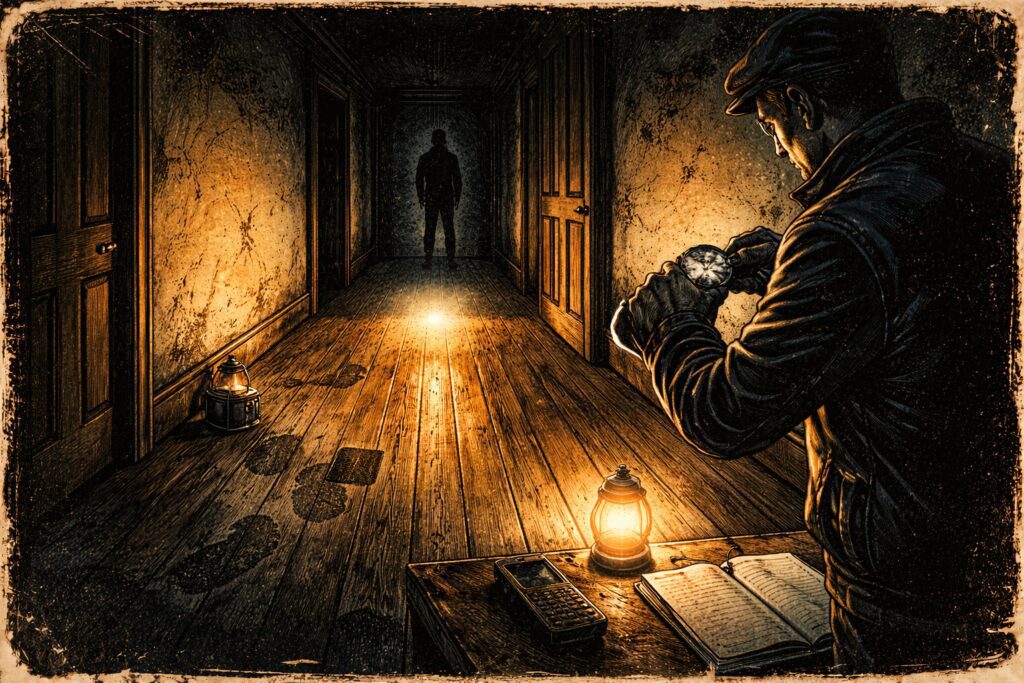
Holmes sometimes sets up situations to test a theory. You can do the same.
Examples:
- leave one room empty and sit in another
- place two recorders in different rooms
- revisit the same area at the same hour on different nights (if possible, or do it later in the investigation)
- change only one condition at a time, like lights, doors, windows, or number of people present
- ask the same question in the same place over repeated visits and compare response patterns
That is very Holmesian. You are not just waiting for spooky stuff. You are testing conditions and developing context.
(Side note: Context matters so much … and it’s usually pushed aside for experiments before context has a chance for you to even understand the claimed ghostly activities.)
7. Keep a casebook, not just an adventure log
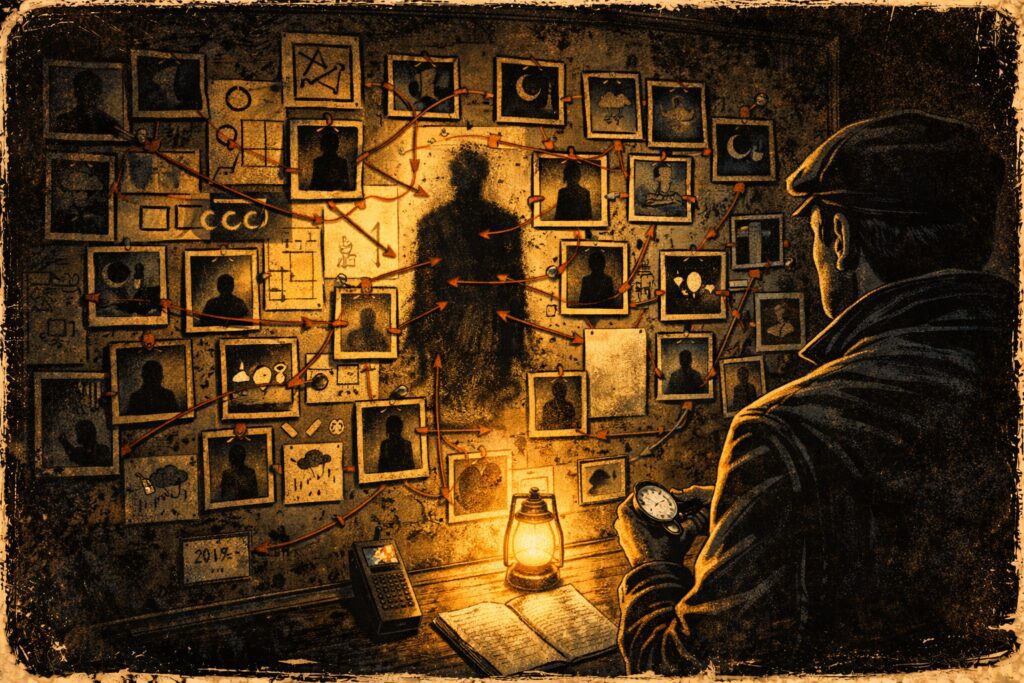
Watson writes the cases down. Documentation matters.
A Holmes-style ghost hunter should keep a casebook with:
- site summary
- history of the location
- map or floor plan
- witness statements
- timeline of events
- environmental baseline
- tests performed
- odd, recurring patterns
- unresolved questions
This turns an paranormal “experience” into a paranormal investigation.
8. Learn the habits of places
Holmes studies neighborhoods, routines, trades, handwriting, cigar ash, train timetables. He understands context.
For you, that means learning:
- when the building is quietest
- what the light looks like at different hours
- what noises happen naturally
- what stories locals repeat
- what weather changes the atmosphere
- whether ghostly activity clusters around anniversaries, renovations, or certain rooms
In other words, know the location so well that the strange thing truly stands out. Familiarity helps the subtle changes stand out even more.
Let’s put a big ol’ caveat on this: Most ghost hunters won’t have unlimited access to a haunt. So, you may want to find a public place (i.e., museum, library, archival society, heritage site, etc.) you can visit often enough to understand its natural state.
9. Be open to the paranormal weirdness, but precise about it
Holmes is rational, but he also investigates cases that look impossible at first. That is the sweet spot for paranormal work.
You do not have to begin with:
“It’s all fake”
or
“It’s definitely a ghost”
Begin with:
“Something is being reported here. Let’s see where the clues and evidence leads to.”
And I think this is the best way to suss out what’s natural, what’s probable, and what’s supernatural.
10. Think like Holmes, write like Watson
Ok, this part is more for your ghost hunting journal, but it’s good to understand the story about a haunt. Your narrative. How you explain what’s happened at a haunted place.
Holmes mode when you investigate:
- calm
- exact
- skeptical but curious
- pattern-driven
- evidence-first
Watson mode when you write:
- vivid
- atmospheric
- human
- story-shaped
- emotionally grounded
That gives you the best of both worlds: A spooky, readable report but based on a disciplined core.
A Holmes-style ghost hunting framework
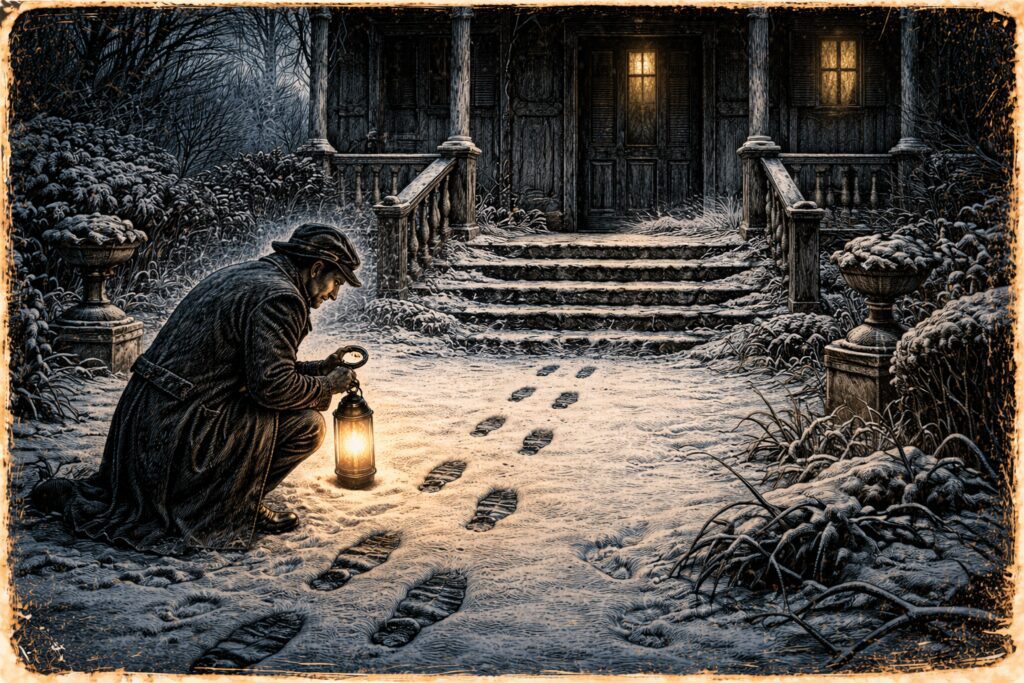
That was a lot to take in, and it might cause some mental dissonance. It’s a bit different than many ways to ghost hunt. So, here’s a simpler framework to use.
The Holmes Method for Hauntings
1. The Incident
What was reported?
2. The Scene
What does the location look, sound, and feel like under normal conditions?
3. The Witnesses
Who experienced it, and what did each person say separately?
4. The Clues
What physical, sensory, or recorded details appeared?
5. The Ordinary Explanations
What natural or human causes could explain it?
6. The Experiments
What can be repeated, tested, compared, or controlled?
7. The Pattern
What recurs across visits, people, or conditions?
8. The Remaining Mystery
What still resists explanation?
Further Reading
Doyle, Arthur Conan. A Study in Scarlet. 1887. Project Gutenberg.
The first Holmes story, and a great place to revisit Holmes’s earliest methods of observation, inference, and case-building.
Doyle, Arthur Conan. The Adventures of Sherlock Holmes. 1892. Project Gutenberg.
A strong collection for Holmes at his most iconic, especially if you want to study how he moves from odd clue to elegant explanation in short, memorable cases.
Doyle, Arthur Conan. The Memoirs of Sherlock Holmes. 1893. Project Gutenberg.
Useful for seeing Holmes work through pattern, motive, and atmosphere, with “Silver Blaze” especially worth reading for its famous clue-based reasoning.
Allan, Janice M., and Christopher Pittard, editors. The Cambridge Companion to Sherlock Holmes. Cambridge UP, 2019.
A smart overview of Holmes as a literary, cultural, and historical figure, helpful if you want to think beyond the stories and into why Holmes still works so well as a model.
O’Brien, James. The Scientific Sherlock Holmes: Cracking the Case with Science and Forensics. Oxford UP, 2013.
This one focuses on Holmes’s scientific habits of mind, forensic thinking, and evidence-based approach.
Now that I’ve written this, I think it’s my new favorite way to investigate a haunt. Sherlock Holmes gives you the perfect bridge between investigation, reasoning, and forming conclusions. He gives you method, discipline, and atmosphere all at once.
So, what do you think about ghost hunting like Sherlock Holmes? Let me know in the comments. Thanks for reading Ghostly Activities. Much appreciated and take care!
Discover more from GHOSTLY ACTIVITIES
Subscribe to get the latest posts sent to your email.