Why I Believe Hauntings Are Supernatural (And Why Science May Never “Prove” Them)

I’m going to say the quiet part out loud. I think ghosts and hauntings are supernatural phenomena. Not “unexplained science we just haven’t discovered yet.” Not “energy we’ll measure someday.” Not “a rare atmospheric effect that only happens in old buildings with creaky pipes.”
Supernatural.
And I don’t say that because I’m anti-science. I’m not. I love science. I respect it. I use it all the time when I investigate.
But after years of reading reports, talking to witnesses, and spending long nights investigating old places … I don’t think science is built to prove hauntings. Not in the way people want. Not with a single test, a few blips on a gadget, and a creepy voice on a audio recorder.
Hauntings don’t behave like a lab experiment. They behave like a relationship between a place, a person, and … sometimes … a certain type of activity.
Science needs repeatability
Science is at its best when:
- You can isolate variables (and there are a lot of variables when ghost hunting)
- You can control the environment (not gonna happen with an building with broken windows)
- You can repeat the conditions (hardly ever happens in the field)
- You can get the same outcome again and again (that usually means something man-made)
That’s the dream setup. That’s where science shines. And, well, hauntings are usually the opposite.
Most “activity” is:
- irregular
- hard to hear
- hard to capture clearly on video (those blurry pics!)
- sensitive to context
- different depending on who is present
And the moment you try to force a haunting to perform, it often stops performing. I mean, if I were a ghost, I wouldn’t touch the Spirit Candle on command. I’d ignore you.
But it’s a pattern I see over and over. People ask, “If it’s real, why can’t you prove it?”
My answer is, “Because this isn’t a toaster.”
If something is intelligent, reactive, or even just “aware” in a way we don’t understand, then controlled testing might change the whole situation. That’s not how we’re used to thinking about evidence, but it’s how these experiences are often described.
Hauntings feel personal for a reason
When people tell me their stories, they don’t lead with a gadget. They begin with a moment from life. And rarely do we record surprising events as they happen.
A feeling of being watched in one room and only that room. A voice that whispers their name. A presence that shows up when they’re alone, stressed, grieving, or exhausted. A sound that repeats, but only when they stop talking about it.
And the weird thing is how specific it can get.
Not always. Sometimes it’s simple: footsteps, knocks, a cold pocket of air rushing down a hallway.
That’s where I think we’re dealing with something that isn’t just physics. We’re dealing with something that behaves like it has intent, or at least a point of view.
Science is not designed to measure meaning.
It can measure temperature changes, EMF, humidity, air pressure and sound waves. It can even help you rule out a lot of false positives.
But meaning is abstract and subjective to the (living) person. And hauntings live in that weird zone between the physical world … and something else. The Veil? The Aether? I’m not sure what you’d call the spiritual realm.
Why haunted locations “change”
This is one of the biggest reasons I don’t think science will ever close the case. Haunted locations are not stable.
Activity changes. It shifts. It escalates, then goes quiet. A hot spot becomes dead for months. A room that felt normal suddenly turns “on” at 12:12 a.m. every night for a week… and then never again.
If you’ve been in this world long enough, you recognize this pattern: Repetition exists; predictability doesn’t. And science wants both.
A few ways I think about it (from a supernatural lens):
1) Same symptom, different cause
“Footsteps” can mean ten different things.
- a residual replay (like a recording)
- an intelligent presence moving through space
- something trying to get attention
- something tied to the building, not the person
- something tied to the person, not the building
Same category of experience. Different “cause” behind it.
2) More than one presence
A location can have multiple layers. Different times. Different stories. Different types of activity. Different people affected.
So yes … you might get EVPs that sound different because they are different.
3) Context acts like a trigger
Renovations. New owners. A tragedy anniversary. A storm. A group of loud people. A quiet night alone. A person with strong sensitivity to the supernatural.
Hauntings often behave like they respond to context, even if we don’t understand the rules. And that context might have a different spirit each time. Again, predictability goes out the window.
4) The “unreliable narrator” problem
Folklore has always warned us about this: Spirits don’t always behave like trained K-9s. Some are quiet. Some are noisy. Some are confusing. Some are dramatic. Some seem to enjoy messing with our expectations.
If you go looking for a one ghost’s behavior pattern, you might be asking the wrong question to a different spirit. It’s not like they’re walking around with name tags on.
Let’s talk about EVP
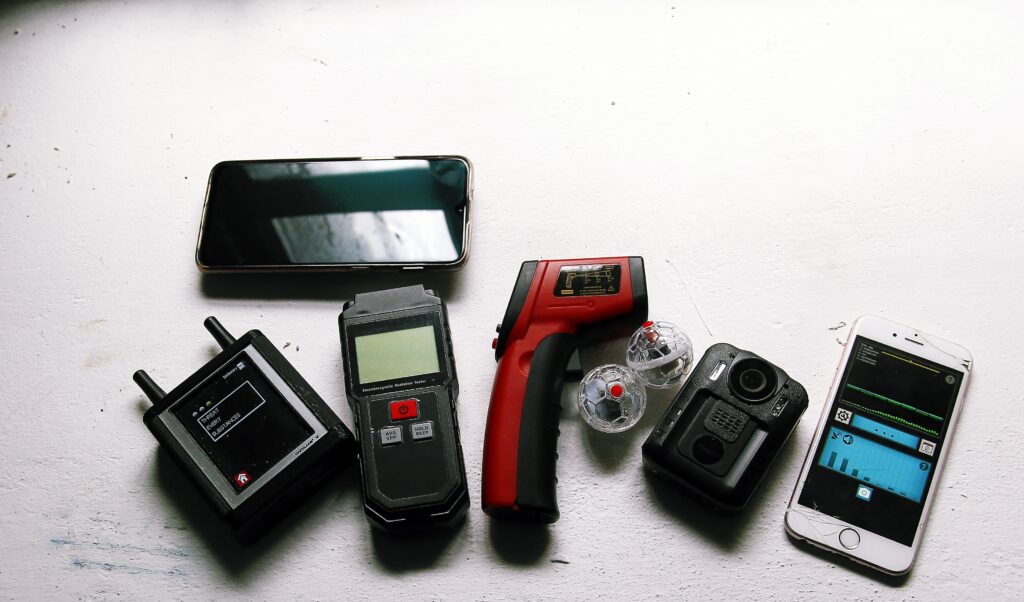
I agree with you that EVP is one of the most consistent categories of evidence. But it’s also one of the least consistent experiences.
You hear the same kinds of things:
- a whisper
- a short phrase
- a clipped word
- a breathy “hey”
- something that sounds like a reply
And yet, the voices don’t sound the same. Even at the same location. Even on the same night. Even on the multiple recorders around the room.
If I walk into a crowded room and ask a question, I’m not going to get one identical voice response every time. I’m going to get different voices, different tones, different distances, different answers.
That said, EVP is also easily misinterpreted. Our brains love patterns. Audio pareidolia is real. Bad acoustics are real. Cross-talk happens. Radio interference happens. Distant people happen. Animals happen.
So here’s where I land: EVP can be compelling. It can also be misleading.
That’s why I treat it as supporting evidence, not proof. A piece of a puzzle, not the whole puzzle. Something to put in context for the rest of the investigation.
So what do I do, if I can’t “prove” it?
I document it like a field investigator, not like a lab scientist.
A lab wants to isolate. A field journal wants to observe, record, compare, and look for patterns over time. It reminds me of supernatural … errrrmmmm … natural history.
When I walk into a reportedly haunted location, my goal is not to “win” a debate with a dead person. My goal is to answer a simpler question:
What happens here, under real conditions, to real people?
Then I try to document it as clearly and correctly as I can.
My “Evidence Ladder”
Speaking of documentation, I really like to use categories, methods, techniques, processes, procedures … you get the gist. So, I like a framework that helps me share my experiences with other ghost hunters. And here’s that framework:
Tier 1 — Weak (interesting, not convincing alone)
- vague feelings (unease, heaviness)
- single witness, no context
- unclear photos (orbs, blobs, streaks)
- one-off noises with no baseline
Tier 2 — Moderate (worth logging)
- repeated reports across time (same room, same sound)
- multiple witnesses describing the same thing independently
- clear environmental anomaly with context (not just “the meter spiked”)
- audio anomalies that survive basic debunking checks
Tier 3 — Strong (hard to shrug off)
- multi-witness event + consistent details
- repeated anomalies tied to time/place pattern
- corroboration through logs (timestamps, floor plan mapping, controlled quiet periods)
- audio/visual evidence that remains odd after ruling out common sources
Tier 4 — Rare (this haunts my dreams)
- interactive responses that track the investigation intelligently
- “impossible” sound placement (footsteps in an empty locked area, repeated on separate nights)
- clear, context-linked communication that multiple people hear in real time
- physical effects with reliable documentation (and strong control checks)
I don’t need every case to hit Tier 4. Most won’t go beyond Tier 2.
But this ladder gives me something to help categorize my experience. It also helps readers understand my stance. I’m not trying to turn every dust orb into a demon.
Hauntings don’t behave like products
People want hauntings to behave like a device. Press a button, get a result. That’s not how it goes.
Even in the most active locations, there are dry spells. And in the quietest locations, you can get one night that changes your whole outlook. This is why I’m cautious when someone says, “Science will prove ghosts any day now.”
Maybe science will prove some things:
- environmental effects that seem like hauntings
- how old buildings create strange sound patterns
- how fear and expectation shape human perception
- how electromagnetic exposure affects mood in some cases
That’s valuable work. I’m glad it exists. But proving the core claim, that a human consciousness persists after death and can interact with us, might not be a “measurement” problem.
It might be a category problem. A haunting may be closer to folklore, witness testimony, and field observation than to lab replication. Not because it’s fake. Because it’s situational.
Where I land
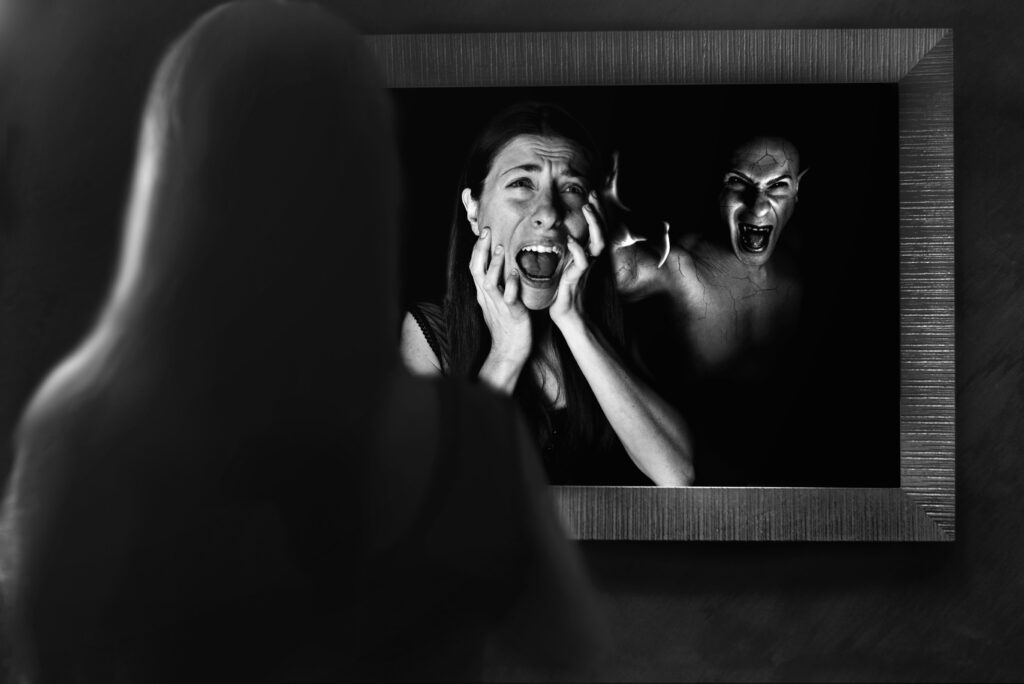
I believe in the supernatural nature of hauntings because the experiences are consistent in reported activity, but unpredictable in behavior on-site.
Footsteps happen. Knocks happen. Voices show up on recorders. Patterns appear in certain rooms at certain times. And still, the activity changes. The story shifts. The feelings are different.
To me, that doesn’t weaken the claim. It describes it. If you’re here because you want a solid proof, I get it. I do. But if you’re here because you want an honest approach, one that respects science without pretending science is the only lens, then you’re in the right place.
I’ll keep documenting what happens. I’ll keep logging the boring stuff. I’ll keep ruling out what I can.
And I’ll keep room in the notebook for the thing that doesn’t care about my expectations.
What do you think about the supernatural and scientific perspective on ghosts and hauntings? Let me know in the comments below. Thanks for reading Ghostly Activities. Much appreciated and take care!
Discover more from GHOSTLY ACTIVITIES
Subscribe to get the latest posts sent to your email.



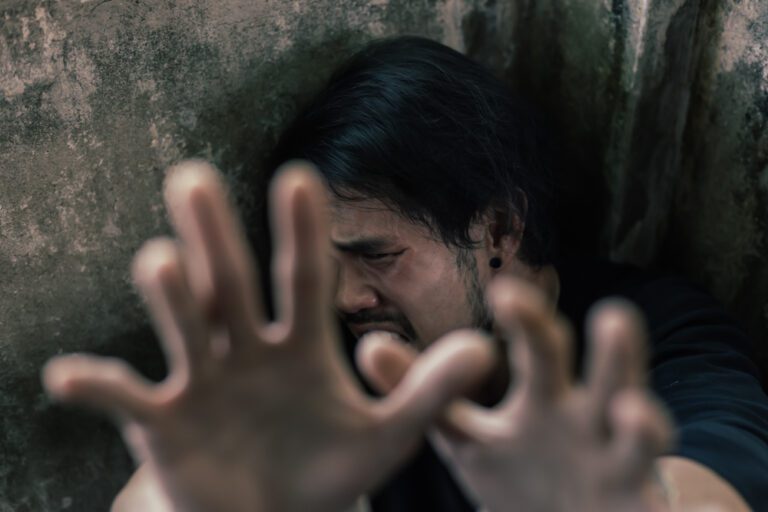
It’s taken me such a long time to realize that ghosts and hauntings are subjective, not objective, experiences. So, I’m going to treat them like something to see, feel, hear, smell (it happens), and record my observations. Not relying on my gadgets as much as I used to.