

Why Do Jack-o’-Lanterns Have Faces? The Folklore Behind Halloween’s Creepy Pumpkins

Key Takeaways
- Jack-o-lanterns have evolved from spooky turnip lanterns used in Europe to the friendly pumpkins we carve today.
- People traditionally carved faces into lanterns to scare off evil spirits or just to frighten neighbors.
- The folklore around jack-o-lanterns is messy and varies by community, embodying change and adaptation.
- The crossing of Halloween traditions with plentiful pumpkins in America transformed the jack-o-lantern into a beloved symbol of Halloween.
- Today, we still carve pumpkins, evolving the tradition while keeping the essence of the original spooky face alive.
Table of contents
- Before the Pumpkin, There Was a Very Angry Turnip
- What Was the Face Supposed to Do?
- Some Lanterns Were Meant to Keep Bad Things Away
- Of Course, You Could Also Scare Your Neighbors
- A Face Turns a Lantern Into Something Else
- Then There Is Jack
- Jack-o’-Lantern Once Meant a Mysterious Light
- And Then the Jack-o’-Lantern Found the Pumpkin
- The Pumpkin Became the Face of Halloween
- Does a Jack-o’-Lantern Really Keep Evil Spirits Away?
- I’m Growing My Own Jack-o’-Lanterns
- Keep a Light Burning in the October Darkness
- Sources
I have monsters growing in my pumpkin patch.
Big ones.
A few of my pumpkins have gotten downright enormous this year. Every time I walk past them, I start thinking about Halloween. I can already picture a glowing face carved into one of those big orange heads.

That got me wondering about something. Why do jack-o’-lanterns have faces?
We could just hollow out a pumpkin, stick a candle inside, and call it good. It would still make a nice fall lantern. But we don’t. We give it eyes. A nose. A mouth. Maybe some jagged teeth.
Then we put the glowing face outside our homes on Halloween night. That is a wonderfully weird tradition when you think about it. It is also much older than the pumpkin.
Before the Pumpkin, There Was a Very Angry Turnip

If you think pumpkin carving can be a chore, imagine doing it with a turnip, because people did.
In Ireland and Britain, people hollowed out turnips and other root vegetables. Then they carved faces into them and placed candles inside. And these were not always cute little smiling faces. Some looked downright nasty.
The National Museum of Ireland has a plaster model of a traditional “ghost turnip” from County Donegal. The original turnip lantern was donated to the museum in 1943. The woman who donated it said this was the type of lantern traditionally made in the area around 1900.
The museum says candles were placed inside the turnips and the glowing faces were used to frighten people on Halloween night. That makes sense as soon as you look at one.A glowing pumpkin can be adorable.
A glowing turnip looks like something you discovered buried under an abandoned church … and I love it.
What Was the Face Supposed to Do?

This is where the folklore gets really interesting. It would be nice if we had one simple answer. Maybe people carved scary faces because the faces were supposed to frighten evil spirits. End of story.
Except folklore is rarely that tidy.
Different communities used carved lanterns in different ways. Some traditions connected them with supernatural protection. Sometimes they were used to scare other people. Sometimes they went along with guising, pranks, and Halloween fun.
In other words, the creepy face could do several jobs. And those jobs could change as the tradition traveled.
Some Lanterns Were Meant to Keep Bad Things Away

There is a useful folklore word for objects meant to protect people from supernatural harm.
Apotropaic.
That is a fancy word for a pretty simple idea: Keep the bad stuff away.
People have used all kinds of protective objects throughout history. Charms. Symbols. Iron. Plants. Crosses. Strange faces.
And yes, some jack-o’-lantern traditions seem to fit into that world.
Halloween itself was associated with protection in Irish tradition. The National Museum of Ireland notes customs meant to protect the home, family, animals, and farm as winter began. Halloween was also considered a night when spirits might be moving through the countryside.
That gives a scary lantern sitting near a house a little more meaning.
Imagine a dark country road before electric lights. It is Halloween. The nights are getting longer. Stories say strange things may be wandering around. And there, glowing beside a gate, is a horrible little face.
I can see the logic. If something spooky is wandering around outside, maybe you want something even spookier staring back at it.
Of Course, You Could Also Scare Your Neighbors

This may be my favorite part. Because sometimes the jack-o’-lantern was not protecting anybody from a supernatural visitor. It was protecting absolutely nobody. It was there to scare some poor person walking down the road.
Irish folklore records collected in 1938 describe people hollowing out turnips and cutting eyes, a nose, and a mouth into them. One account from County Tipperary says the lantern was placed on a fence or gate specifically to frighten people passing by.
That is Halloween. Forget complicated theology. Somebody made a glowing monster out of a root vegetable and left it beside the road to scare the neighbors.
Gee whiz, people really have not changed much. We just have motion-activated skeletons now.
A Face Turns a Lantern Into Something Else
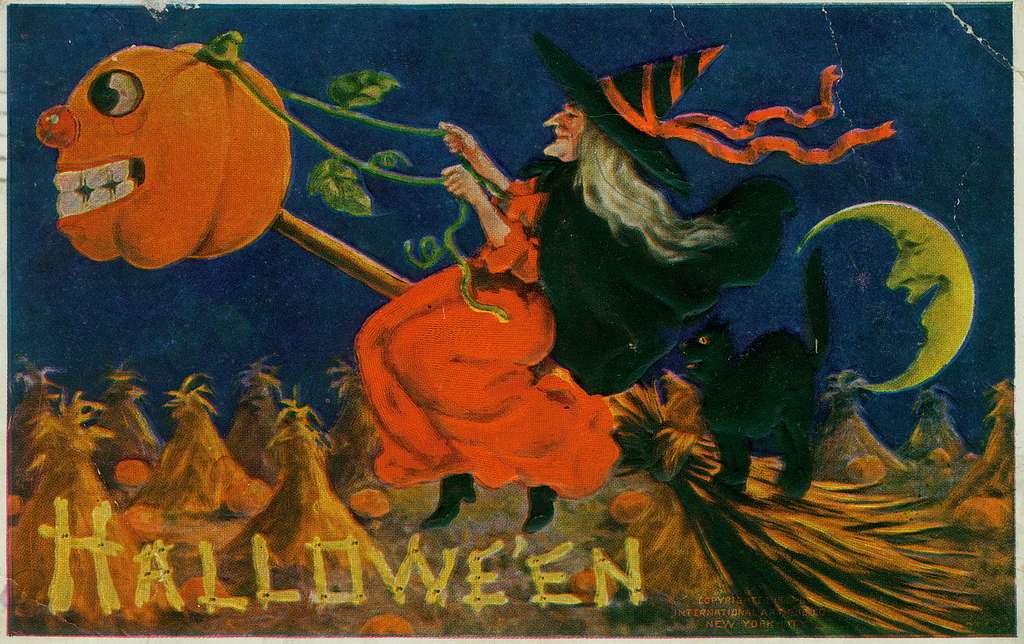
This is the part that fascinates me. A hollow turnip with a candle inside is a lantern.
Cut two eyes into it and everything changes. Now it is looking at you. Add a nose and mouth and suddenly the lantern becomes a character.
Maybe it is a ghost. Maybe it represents some wandering spirit. Maybe it is a monster. Maybe it is nothing more than a prank.
But it feels alive.
Galway City Museum describes traditional turnip lanterns with crude features such as glaring eyes and gaping mouths. They were left on walls, fences, and gates, or sometimes placed in other spooky locations to startle people after dark.
The face did not have to be pretty. Actually, ugly seems to have helped.
That is another thing I love about folk traditions. Nobody needed a pumpkin-carving template from the store.
You had a turnip. You had a knife. You had a candle.
Make something horrible.
Then There Is Jack
Of course, we cannot talk about jack-o’-lanterns without meeting Jack. There are several versions of his story.
That is your first clue that we are dealing with folklore instead of a single historical event.
In one common version, Jack is a troublesome fellow who manages to trick the Devil. Jack eventually dies, but Heaven will not take him. Thanks to his dealings with the Devil, Hell will not take him either.
So Jack has nowhere to go. He is left wandering the earth. His only light is a burning coal carried inside a hollowed vegetable.
The Library of Congress has documented several traditional forms of the Jack story, including a version in which Jack is a blacksmith who tricks the Devil and later wanders with a glowing coal in a turnip.
It is a great ghost story. It also gives us a wonderful image. A lonely figure wandering through the darkness with one strange little light.
Jack-o’-Lantern Once Meant a Mysterious Light

Here is another wrinkle. The name jack-o’-lantern existed before our familiar carved Halloween pumpkin.
In Britain, the term could describe a man carrying a lantern or a night watchman. “Jack” was sometimes used as a generic name for a man whose real name was unknown.
The term also became associated with strange lights seen around marshy places. Those lights are better known as will-o’-the-wisps. People saw a flickering light out in the darkness and imagined a mysterious Jack wandering around with his lantern.
Exactly how that name became attached to our carved Halloween lantern is not completely clear. Even the word history leaves us with some mystery.
I like that.
We do not have to force every piece of folklore into one perfect origin story. We have wandering lights. We have stories about Jack. We have carved vegetable lanterns. We have Halloween pranks. We have beliefs about spirits.
Over time, those ideas bump into each other. Traditions do that.
And Then the Jack-o’-Lantern Found the Pumpkin

This is where our little glowing face gets a major upgrade. When Halloween traditions crossed the Atlantic, they reached a place where pumpkins were plentiful.
And pumpkins are magnificent jack-o’-lantern material.
They are big. They are hollowable. They give you plenty of room for a face. And compared with carving a turnip, I imagine working with a pumpkin must have felt like somebody finally invented power steering.
There is also something wonderful about where this transformation happened. Pumpkins are from the Americas. The orange pumpkin lineage commonly associated with jack-o’-lanterns comes from plants domesticated in the Americas thousands of years ago.
So an Old World Halloween tradition met a New World plant. And they were perfect for each other.
That is the part of this story I really love. The tradition did not disappear when people moved. It adapted (like folk traditions do to stay relevant). The vegetable changed. But the face stayed.
The Pumpkin Became the Face of Halloween

Americans took to pumpkin jack-o’-lanterns in a big way.
By the early 1900s, jack-o’-lanterns were already familiar parts of American Halloween celebrations. Historic newspapers preserved by the Library of Congress show pumpkin carving, jack-o’-lantern decorations, and plenty of Halloween mischief. A 1915 newspaper feature even called the jack-o’-lantern the symbol of Halloween.
But something else happened along the way. Jack-o’-lanterns got friendlier. We still carve horrible faces. I certainly plan to.
But we also make smiling pumpkins. Goofy pumpkins. Surprised pumpkins. Cat pumpkins. Movie-character pumpkins. Elaborate works of art that probably take longer to carve than it took me to write this article.
The scary face did not disappear: Carving just expanded.
That’s living folklore. People inherit a tradition and then mess with it. Make it something their own. We add things. We change things. We teach it to our kids. They change it again.
There is no Jack-o’-Lantern Committee coming around to inspect our pumpkins for historical accuracy.
Thank goodness.
Does a Jack-o’-Lantern Really Keep Evil Spirits Away?

Maybe that depends on which tradition you ask.
We do have folklore connecting Halloween with supernatural protection. We also have accounts of scary lanterns placed at gates, walls, windows, and other boundaries. And we have plenty of evidence that people simply enjoyed frightening each other with them.
I would be careful about saying that every jack-o’-lantern was originally meant to ward off evil spirits. Folklore is messier than that. But the protective interpretation fits comfortably among the traditions surrounding these glowing faces.
And there is something wonderfully spooky about where we still put them.
- On the porch.
- Beside the door.
- Along the walkway.
- At the edge of the yard.
The jack-o’-lantern often sits right at the boundary between our warm house and the darkness outside.
Today, that glowing face tells trick-or-treaters they are welcome. But once upon a time, maybe another glowing face had a different message for whatever happened to be wandering past.
Keep moving.
I’m Growing My Own Jack-o’-Lanterns
Which brings me back to my pumpkin patch.

I have grown pumpkins before, but a few of the ones out there this year are absolute monsters.

Standing there looking at them makes this whole tradition feel a little different.
These are not Halloween decorations yet. They are plants growing in the dirt. But give them a little more time.
In about a month, I’ll …
- Harvest one.
- Cut off the top.
- Scoop it out.
- Give it eyes.
- Give it a horrible grin.
- Put a light inside.
Suddenly I am doing my own version of something people have done for generations.
The vegetable is different from those old Irish turnips. The tools are different. The world outside my door is certainly different.
But the basic idea survived.
- Make a face.
- Put a light behind it.
- Set it out in the darkness.
- And voilá …
Sometimes folklore really is that simple.

Pumpkin Growing Tips
This year seems to be a bad year for pumpkins. I’ve heard from my friends out here in the PNW as well as back in my old stomping grounds in Illinois and Wisconsin: The gourds aren’t growing. So, they asked me how I got some of mine to grow. Here’s what I did (plus what I won’t do next year):
1. Germinated 2 vines (out of 6) in my greenhouse
2. Planted them all in an elevated dirt patch on June 1st
3. Used a bucket drip kit to keep the soil by the root moist
4. Switched to hand watering once the vines took off and baby fruit formed
5. Watered very close to the root to prevent powdery mildew from forming
6. Fertilized with fish guts solution every 2 weeks (a cup or two will do)
I still have fewer pumpkins this year than last. I might have 12-14 when the season ends. But I have 3 really big ones and another 4 or 5 of a good carving size.
What I Won’t Do Again
I’m not going to germinate my pumpkins in the greenhouse next year. The seeds I put directly in the ground produced bigger pumpkins. I think the pot cramps the roots, and the water built up in them, causing a bit of rot. That delayed the vines’ growth.
Keep a Light Burning in the October Darkness

I started looking into jack-o’-lanterns because I wanted to know why we carve faces into pumpkins. I expected one old explanation.
Instead, I found a tradition that kept changing.
Some carved faces frightened neighbors. Some were associated with protection from things that might be wandering around on Halloween night. Folktales gave us a restless Jack carrying his lonely light.
Then people crossed an ocean and discovered that pumpkins made fantastic lanterns.
Eventually, the glowing pumpkin face became one of the great symbols of Halloween. And we’re still changing it. We’re still carving. We’re still telling the stories. We’re still putting little lights into strange faces when October gets dark.
Mine just happen to be getting ridiculously large this year.
Sources
Dúchas.ie, National Folklore Collection, University College Dublin. “Homemade Toys.” The Schools’ Collection, Ballyhaise, County Cavan, Vol. 0973, p. 213. Collected in 1938. This firsthand folklore account describes hollowing a turnip, carving eyes, a nose, and a mouth into it, placing a candle inside, and setting the lantern on a wall or gate.
Dúchas.ie, National Folklore Collection, University College Dublin. “Homemade Toys.” The Schools’ Collection, Ardfinnan, County Tipperary, Vol. 0571, p. 152. Collected in the 1930s. This account describes carving a face into a turnip, lighting it with a candle, and placing it on a wall to frighten people.
Galway City Museum. Brendan McGowan. “Making a Traditional Turnip Lantern.” 29 Oct. 2025. Includes folklore accounts from the 1938 Schools’ Collection describing carved turnip faces used as Halloween lanterns and to frighten passersby.
Library of Congress, American Folklife Center. “Spooky Stories for Halloween 2022 on the Folklife Today Podcast.” 27 Oct. 2022. Folklorist Jack Santino discusses traditional Jack-o’-Lantern tales, including the wandering Jack, his deal with the Devil, and the use of turnips and other vegetables before pumpkins.
Library of Congress. “Halloween: Topics in Chronicling America.” Research guide to historic American newspapers. The collection documents jack-o’-lanterns as established American Halloween imagery by the early 1900s and points to period newspaper coverage from 1907 onward.
Merriam-Webster. “History of Jack-O’-Lanterns.” Explores the history of the term jack-o’-lantern, its earlier use for mysterious marsh lights and will-o’-the-wisps, and the uncertain path by which the name became attached to carved pumpkins.
National Museum of Ireland. “Ghost Turnip.” National Folklife Collection, F1943.350. Documents a traditional turnip lantern from Fintown, County Donegal. The donor stated that this type of lantern was traditionally made in the area around 1900. The museum notes that candles were placed inside and the lanterns were used to frighten people on October 31.
National Museum of Ireland. “Ghost Turnips, the Púca, Fortune-Telling and Evil Abductions: How Our Ancestors Inspire Our Halloween Celebrations Today.” National Folklife Collection. Discusses traditional Irish Halloween practices involving protection, spirits, guising, pranks, scary turnip lanterns, and other seasonal customs.
Smithsonian Institution. “Where Did Your Favorite Thanksgiving Day Food Originate?” Smithsonian anthropology resources. Notes that the orange-skinned Cucurbita pepo pumpkin lineage associated with jack-o’-lanterns was domesticated in the Americas roughly 10,000 years ago.
Thanks for reading this article on Jack O’Lanterns. Do you have any special pumpkin carving traditions for Halloween? If so, let me know in the comments. Much appreciated and take care!


Hi Gang. I’ll update this post with my jack o’lanterns. The pumpkins start to turn orange now. I might get one or two late growers. Hoping the new fruit makes to full size in early October.